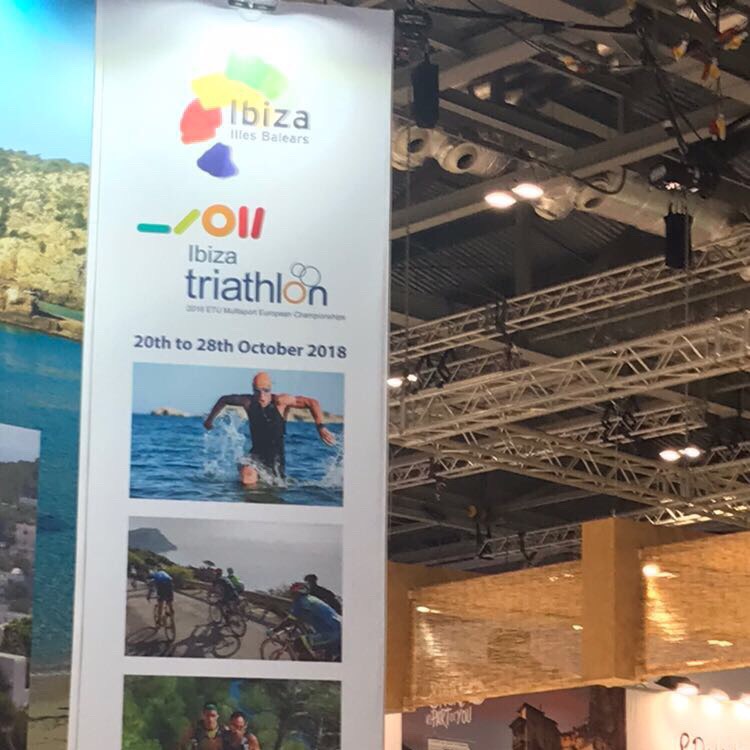
Ibiza Focussing on Sport, Culture and Wellness at WTM London

It’s that time of the year again when all the major players in the travel industry congregate in London for the World Travel Market (WTM), one of the 3 major European travel fairs alongside Madrid and Berlin.  This is where all the main people can be found under one roof room, meetings are arranged, business cards are exchanged and deals are agreed.

The main focus in London is naturally on the British market which is Ibiza’s 2nd largest in terms of incoming tourists but the mood this year won’t as upbeat as usual due to the increasing doubts over what Brexit will actually mean to the Spanish tourist industry.

Historically the WTM is all about pushing low season activities such as gastronomy, culture, sport and wellness and all these are being heavily promoted this year in London. Ibiza is now a main hub and market leader for ‘wellness’ with over 20 spas on the island, 23 ‘agrotourism’* hotels and dozens of yoga schools and retreats.  ‘Boot Camps’ such as No1 Boot Camp where people are put through their paces in a military fashion for a few days are also growing in size and demand.

The peculiar thing is that Ibiza’s world famous Super Clubs AREN’T promoted in London which is like Las Vegas not promoting casinos but it’s always been this way.  The Island’s tourist department has a very small budget in comparison to the clubs so leave them to promote themselves globally and choose instead to focus on ways to attract people to the island during winter and the the low season months, namely April, May and October.

Ibiza now enjoys more connections than ever before with Ryanair operating international flights from late March until the end of October not forgetting British Airways who operate flights from London all year round almost on a daily basis. Low season fares are usually very reasonable so the focus is on the products that hook the people to come over when the island isn’t bursting at its seams.

This year the Ibiza stand is independent from the Balearic Islands main area which shows a growing confidence and although the WTM is viewed by many as a big jolly up for the politicians (which it is) the exposure that Ibiza gets on a world business level at the WTM is important and has been increasing over the years building on the brand and trying to convince everyone that the White Isle is not all about the clubs (which it isn’t).

*Agrotourism hotels are rural retreats (usually converted from large old houses) that offer boutique style rooms for nightly rental

10 THINGS WE LEARNT FROM IBIZA 2017

1. THE SAN ANTONIO COUNCIL HATES THE WEST END

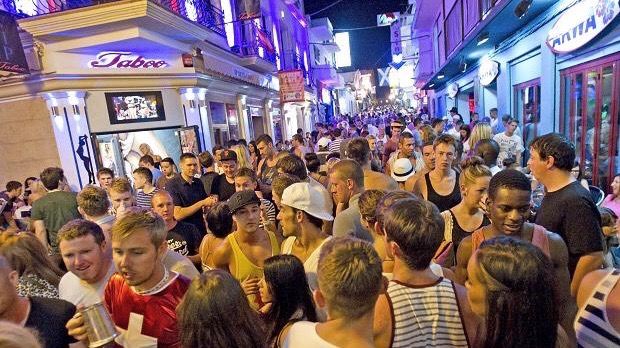
Not exactly a secret for those following the shenanigans in San An over the last couple of years. First they banned legal PR’s, then removed the terraces at midnight and now new noise controls for 2018 means that farting loudly will become a punishable offence whilst pickpockets and prostitutes roam freely.

2. FIVE STAR HOTELS ARE HERE TO STAY

Massive investment by large corporations has seen Ibiza’s hostelries morph into luxury world class hotels with eye watering prices. That segment was previously under served so in many ways the island is playing catch up however many are concerned it’s now suffocating that mythical ibiza spirit. 1 star hotels charging 3 star money also means a perceived lack of value for potential repeat clients.

3. IBIZA STILL CAN’T COPE IN AUGUST

Too hot, too many people, too much traffic and no long term solutions in sight means that getting through August feels like an achievement in itself. A proposed cap on tourist beds will mean very little if Ibiza Airport continues to post record figures so don’t expect any changes on this front anytime soon.

4. HÏ IBIZA IS A NEW BREED OF CLUB

The most anticipated event of the year saw a brand new, shiny super club that was custom built with a specific audience in mind, probably the first time that’s ever happened in Ibiza on this scale. The auditorium type design wasn’t to everybody’s taste but the reviews were mainly positive with a couple of nights getting rave reviews. Expect Hï to come back in 2018 with more big money signings and cement their position at the top table.

5. TASTES ARE CONTINUALLY CHANGING

The way Ibiza has changed over the last few years has taken many by surprise but it’s being driven by the people who come here rather than the other way round. For many years it meandered along in a hippy like trance offering decent value for money and cool nights open to all, now the craving for a short duration/VIP experience has seen a relentless surge upmarket focussing so much on disposable wealth that even Portinatx will soon to be declared a kid-free zone. Who’d have thought it!

6. DAYTIME IS STILL THE NEW NIGHTTIME

Back in the 90’s and 00’s there was just Space, DC-10 and Bora-Bora to get your daytime kicks whilst the majority of clubbers spent the day on the beach or in bed catching up on zzz’s after the previous evenings excesses. However, if you wind the clock back even further then you will see that Ku (now Privilege), Amnesia and Es Paradis all started out as daytime affairs with bare chested hulks and big chested babes. It’s history repeating as the masses now crave for daytime fun in the sun at places like Blue Marlin, Ocean Beach and Ushuaia and this won’t change unless the políticos want it to.

7. THE PROPERTY CRISIS SHOWS NO SIGN OF EASING

The simple economics of supply and demand has seen rental prices shoot up as Ibiza’s population has more than doubled in the last decade. Too many people want a piece of the Ibiza action pushing prices up while driving many away and scaring off a whole new generation of Ibiza lovers. Public sector workers can’t even afford to live on the island meaning there’s a staff shortage. Some say it’s greed while others point to the open market so for 300 days of sunshine every year and a quality of life like no other the Ibiza dream now comes at a high price.

8. IBIZA PARTY PEOPLE ARE GETTING OLDER

With the changing dynamics there’s been a definite shift in the demographic frequenting the White Isle. A whole new generation of potential ibiza-philes are being tempted by Croatia and other destinations offering sun, sea and good times at a fraction of the cost. In the short term it’s great that the 30-50 year olds bring their fat wallets to the island but many are concerned that their won’t be anyone to replace them when they hang up their dancing shoes.

9. SOME BALEARIC RESIDENTS DONT LIKE TOURISTS VERY MUCH

The Balearic backlash against the archipelago’s biggest (and only) commodity gathered pace in 2017 with street rallies and public meetings as unhappy residents voiced their concern over mass tourism. Privatised beaches in San Jose, public disorder in San Antonio and noise issues in Playa den Bossa have been debated in local bars on the island yet nobody can come up with a sustainable plan that makes any sense, never mind works. A ‘different type’ of tourism seems to be the collective desire whatever that means.

10. IBIZA 2018 WILL BE DIFFERENT BUT THE SAME

The squares on the board maybe placed a little differently but Ibiza will still attract those wanting fun, sunshine, food, culture, music, beautiful nature, friendly hospitality, and a geographically easy getaway. What they do when they get here will constantly evolve and that’s all part of the fun. Expect more political maneuverings in the build up to 2019 elections, more noise issues, more fall outs, more gossip, more A-Z listers and lots and lots more people. Ibiza……never boring, always interesting.

Ibiza 2017: Clubbing Review

2017 will be remembered as a strange year for many businesses on the White Isle and the club scene was no different. So who had a good season, and who didn’t?

In terms of clubs, Privilege and Eden were back on the Ibiza clubbing map after a few years in the doldrums. Many of the old Space backroom staff moved to Privilege and you could tell that their time, contacts and experience were injected into the place. The Carl Cox parties in July were the busiest the club has seen, eclipsing even Manumission, BBC Radio 1 and those Tiesto nights. Cox is still as popular as ever so by only playing two dates (at his own parties) ensured the nights would be a roadblock. Resistance did well too with Sasha and John Digweed and the roof lights in the main room were something else. The Afterlife parties (another ex-party from Space) and their combined closing party with the club definitely laid down a marker for the coming years.

Eden has finally recovered from being sold and the Gatecrasher fiasco, with the recovery starting last year, and Defected being the flagship party that will mean Eden can choose promoters to work with next year, rather than trying to find those that would take the risk. Well done to Defected Boss Simon Dunmore l for trusting in Eden, getting their DJs right and putting San Antonio club back into the mix.

Hi was the big news of the summer taking over the old Space premises in Playa d’en Bossa. Their line up pre season looked good, with a mix of DJs and music genres rather than the EDM that dominates their sister club, the daytime venue, Ushuaia. They certainly spent a lot of money over the winter totally transforming it into a more VIP focussed club, but did they forget that you need the dancefloor full, to create the atmosphere?

It would certainly appear so, as in June and even into July, they were giving away wristbands for entry and it took them longer to establish their identity and brand. Armin Van Buuren’s night and Glitterbox looked like the only two nights where both rooms were working well, and I’m sure the owners will look at how to get the club room working next year. For such a new club, and with so much hype, if you ask for most people’s favourite part of the club, most will tell you it’s the Wild Corner, where they have DJs in the toilets. A small, intimate room, where dancing is the focus, there is no VIP in there. From an outside perspective, it looks like the DJs are happy to take the money to play there, but this year the club lacked soul and substance, and it will probably take 3 years to get that credibility, and their programming right.

Amnesia had a good year, especially when you consider all the problems they had last year with the tax inspector raids and the licensing issues after the Music On, Coccon and Hyte parties regularly over ran during the season, rather than closing on time. Elrow was the biggest party, and continued their Ibiza and global domination as the best party in the world. The production is another level, their only problem now, is that they are in fashion, there is so much going on, and so many of the punters are on their phones recording it all, rather than engaging with the party and the music.

DC10 is still the best club on the island musically and thankfully over the last 3 years the club has become a much safer clubbing environment, while still keeping it’s authenticity as the place with the true Ibiza spirit and sound. Circoloco, Paradise and Wild Life were all successful and busy.

Pacha had another solid season and Hot Since 82’s new Friday night residency was the only new party, and performed well. There was no evidence of the new owners for those on the dancefloor, so it will be interesting to see if they start to influence things in 2018. FMIF and Solomun were the two nights that were sold out every week, with completely contrasting styles of music. With 3 French DJ heading up their own nights, it will be interesting to see if one of those nights changes next year.

Sankeys had a decent year with a good music policy and atmosphere, Redlight, Abode and Do Not Sleep all performing well with their usual crowds. Having seen Hi have to adapt their music on a couple of nights, it looked like they were targeting the Sankeys crowd on their more underground nights of In the Dark and Black Coffee.

Ushuaia will be worrying about where the mainstream music scene is going next year. Ushuaia’s current business model relies on big DJ wages for artists that will pack in 10,000 people to the club. Guetta and Garrix seem untouchable, and are pop stars, but several of the other nights were hit or miss this year and it will have been the VIP tables, rather than the crowds, that covered the wages. If EDM is finally on the wane, then they have to find other genres and DJs who will pack the club and their music will lend itself to the big stage production they can offer. Certainly Tinie Tempah works (and worked a longer season than the EDM guys) and confirmed that UK Garage and the urban genres are on the rise again.

Other worthy mentions need to go to Ocean Beach, which is firmly on the aspiration list for the San An/ reality TV/ Instagram crowd, and the parties and day parties are stronger every year. The Acid Sundays and Wax da Jam parties at Las Dalias are well worth a visit. Children of the 80s seemed to have another good season after changing to Fridays. . Woomoon at Cova Santa was something completely different and certainly worth a vistit, although will it be back in 2018 after Cova Santa operating outside of their license? Pete Tong’s Sundays at Blue Marlin seemed a good fit for the venue and the artist. Ibiza Rocks’s pool parties seemed to go down well this year, with Craig David having another ridiculous summer. It’s a real shame Andy McKay doesn’t feel he can do live music at the hotel anymore and shows the politics and regulations that are in operation on the island.

The main observation of this summer, is that the crowds have changed dramatically in the last few years. Ibiza use to be for dance music fans. Clubbers came to see a whole range of DJ’s and parties during their weeks holiday, and listen to music they wouldn’t necessarily hear at home. The island has luckily been in fashion during the global recession, and with the tourism problems in Turkey, Greece, Egypt and Tunisia, Spain and Ibiza has had a bumper few summers.

Looking forward the problem Ibiza may have is that when those markets open back up again and dance music goes out of main stream fashion. The island is not nurturing the new Young fans who have been coming for 5-10 years, and has probably put them off coming back with the commercial music, over pricing and crowded roads, beaches and resorts. Those people who have been crying out for less tourism might be about to get what they wished for.

Many thanks to ‘The Clubbing Insider’ who helped me with this article
San Antonio’s West End set for More Noise ‘Protection’

In news that could greatly affect San Antonio’s famous West End, the area will now be declared a ‘Zone of Special Acoustic Protection’ (ZPAE) after the local government decided to act after receiving the results of new acoustic studies carried out over summer.

The studies showed that over the summer the legal maximum noise levels were exceeded in 4 of the 5 measuring stations reaching up to 85.9 decibels, 20 decibels higher than allowed. The measurements carried out in 2017 support what was already detected in 2016, when a first study was carried out to develop a noise map which indicated the main sources of noise pollution in the town centre.

San Antonio town hall started the process in February 2017 and with measurements carried out this summer in two areas of the urban center (sa Punta des Molí and West End) have determined that there is sufficient reason to proceed with the declaration of a ‘Special Zone of Acoustic Protection’.

A ZPAE is an area where there are ‘high noise levels due to the existence of numerous recreational activities, public establishments, the activity of the people who use them, traffic noise as well as any other activity of a permanent nature that affects the saturation of the sound level of the zone even when each activity, individually considered, complies with the levels established by law’.

More importantly the ZPAE declaration allows the local lawmakers to increase the corrective measures aimed at alleviating the existing noise saturation. The municipal technicians will now study what measures are to be implemented in order for them to be approved in the coming months.

Once the ZPAE declaration has been carried out, annual measurements will then be made to determine the impact of the new measures taken and how the protection zone evolves. The corrective actions can then be lowered or intensified annually based on the data collected.

Once approved, the ZPAE can not be lifted until the acoustic quality objectives set by the regulations are reached: 65 dB during the day and 55 at night.

San An’s Mayor José Tur said “All the studies conducted over the last two years indicate that the limits have been exceeded. We cannot ignore this and therefore we have to establish the mechanisms to return the area to a normal situation”.

Environment councillor Pablo Valdés, believes that the declaration of ZPAE “can and should mark a turning point in the municipality.”

Sr Valdés continued “We will try to recover the coexistence and to deal with the noise that caused the depopulation of the urban center, linked to the alterations of the public order and generating a perception of the current tourist model as a hostile activity.”

Source: Periodico de Ibiza

Catalunya: The Ex-Pats View

By Laurent Bates in Catalunya

After much anticipation 10 October 2017 didn’t quite turn out to be Independence Day here in Catalunya but the Catalan government has shown their intent and soon will come the day when we will be finally free from those ghastly Spaniards, those who repress our language, our culture and take all of our money…….well that is what the ‘Generalitat’, the Catalan regional government, would have us believe.

But what is it really like living here in the heart of Catalunya in these most testing of times? What is it like for a British ex-pat from Lloret de Mar, that most cosmopolitan of towns on the Costa Brava?

Having been here over ten years it’s difficult not to get caught up in the feeling of immense pride that the Catalans have for their region, the people are walking a little taller at the moment, confident that this is their time, their chance to create a Catalan Republic.

Most people accuse them of being selfish and wanting to break away from Spain so that they’ll be even wealthier than they already are. This has some truth of course but it isn’t the overriding reason.

My Catalan friends and neighbours genuinely don’t believe that they are Spanish, they have no interest in the national football team, no loyalty or feelings towards the King. They genuinely feel they are a separate race to the Spanish with a long unique history to back up those claims.

Many of them accept that after independence things could be very tough financially for a number of years, they expect a backlash from Europe and a boycott of Catalan goods and services from the rest of Spain. It doesn’t matter to them though because they will finally have their own country, their own homeland to be proud of.

That is what is driving this push for independence and you can sense it the air.

The joy was palpable on 01-O (1st October) at the polling booths, a joyous occasion, everyone clapping and cheering each other as they placed their votes. That is why the police brutality was so shocking, they all knew it was possible but not many really expected the Spanish police to attack as they did. It just strengthened the ‘them and us’ feelings and played into the hands of the ‘independistas’.

So how will life be for expats if independence becomes a reality?

We would hope that not a great deal really changes and we would just get on with our everyday lives, working hard, taking the kids to school, albeit in a new country that has a deliriously happy native population celebrating all things Catalan on a daily basis, dancing Sardanas and building human towers until late in the evenings.

The reality though could be very very different and it is a terrifying time for us. Kicked out of Europe, the loss of the Euro, big business leaving in their droves, a run on the banks, our savings devalued. All a possibility and not what we had in mind when we left our previous homelands.

Over the coming weeks and months we will know if the unity of Spain will continue, or if instead, our futures are about to be tossed into to the air. We just hope that we don’t come crashing down like one of those magnificent human towers.

Bon día tothom

Laurent Bates has lived and worked in Spain for over 20 years and has been based in Catalunya for over 10 years. He now runs British Food Imports in Lloret de Mar, Costa Brava. An avid Coventry city supporter, he is married with 2 children.

Ibiza Bubble but Barcelona Trouble Underlines an Uncertain Future

The Catalan independence troubles have brought home just how fickle and polarising the world is at the moment. Extreme views being met with extreme measures is the recurring theme and Spain and it’s autonomous regions is no different.

As far as Ibiza and the Balearics is concerned we were all riding along on the crest of a wave, living in the bubble that mass tourism on a small island provides. An island by definition tends to be more removed from the mainland but in Spain you’re never too far from a political scandal with corruption at the heart. This has been a way of life since General Franco ruled with an iron fist so knowing the right people has always been a valuable commodity.

For those that live in Ibiza, Barcelona tends to be your big city option. Some prefer Palma or Madrid but for the majority it’s Barcelona that’s the Mecca when you require a big city fix. That’s why when terrorists committed mass murder on 17 August 2017 it was too close for comfort for those who know the Catalan capital intimately and especially those who have young family at college in the vicinity.

Terrorist attacks are hard to stop due to small cells of extremists plotting together so after that atrocity there was very much a stiff upper lip ‘business as usual’ feeling even though it was a tragic world event. Then 01-O happened.

01-O stands for 01 October, the date the Catalans voted overwhelmingly to create an independent republic and is now etched in the Spanish psyche much as is 11-M (11 March 2004 Madrid bombings) and 11-S (Sep 11 attacks). The vote had already been ruled unconstitutional and illegal by the highest court in the land and there was only a 40% turnout, boycotted by an opposition that viewed it as unlawful activity. The lack of independent observers at the voting stations is also a concern.

In terms of world events this is a massive test for Spain which has reverberations all through the Kingdom with many other autonomous regions looking on with interest. Even King Felipe has been dragged into the argument making an unscheduled TV address calling for unity but not even mentioning the violence from his own security forces. Pictures of heavy handed policing being beamed all over the planet hasn’t done anything for Madrid’s public relations or Spain’s reputation however for those that live in the country and have seen first hand how police forces, such as the Guardia Civil, operate it came as no real surprise.

The knock on effect for Ibiza is minimal at the moment but shouldn’t be underestimated either. The polarising views of the Spanish electorate has been laid bare for all to see in recent times and this issue pours more fuel on the fire however Ibiza doesn’t view itself as Catalan so even though the local debates have been vociferous they have also been in the 3rd person so far.

Ibiza and Barcelona may share a similar DNA, history, language and culture but the native ‘Ibicenco’ population view themselves very differently to the Catalans. In many ways the similarities underpin the differences and if you mention Catalunya in general conversation you are usually met with rolled eyes and a ‘they are a different breed’ reply, which isn’t surprising seeing as Catalans view themselves as a different race.

What the Barcelona problems have done is create more uncertainty and pessimism in an already fractured market. Even though Ibiza is having a boom there are many businesses who are struggling due to the polarising nature of the current marketplace.

For Ibiza there are plenty of issues that are of more pressing concern. A diminishing middle market, an over proliferation of half empty 4 and 5 star hotels, a moratorium on tourist places, the high cost of living, talk of limiting tourism in certain areas, a building ban holding back regeneration and growth and a housing crisis that means that many public service workers can’t even afford to live on the island. These and many more are all genuine concerns that are only exasperated by the self inflicted troubles going on across the water. This isn’t a terrorist attack per se, it’s political terrorism from both sides reigniting feuds and opening old wounds.

Like the Basque problem before it the Catalan question is now front page news across the world. As usual there are 3 sides to every story but an illegal election called for by self serving politicians and a heavy handed response by a hated historical enemy has only served to highlight the differences that exist and this doesn’t sit well with Ibiza, a well known liberal and hippy island that likes to bring people together, not force them apart.

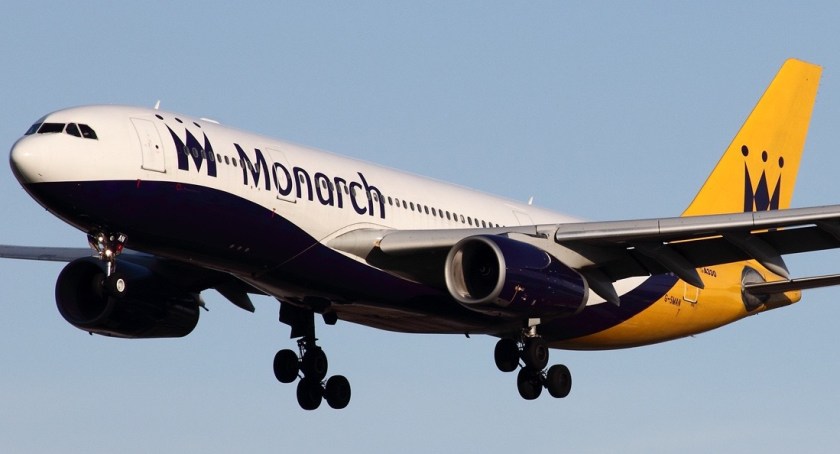
Monarch Goes Under as Ibiza Posts Record Arrivals – Go Figure

The decline of Monarch Airlines is a sad but inevitable consequence of a tough market but when you live on an island that relies almost exclusively on flight connections then this type of news is felt a little more sharply.

Monarch were a good choice for those wanting a cheap option however their late slots meant that flying on their aircraft was usually a lively affair. The 11pm departures from Gatwick and Manchester were particularly special with the weekend party brigade although unlike other airlines the experienced MON staff were usually good at diffusing over exuberant situations.

Unfortunately Monarch got dragged into a price war with the the other major flight-only players which meant that even though they were carrying more people their revenues were getting lower. Throw in a Brexit-inspired exchange rate crash and a security crisis is the eastern Mediterranean and for Monarch the worlds obsession with cheap flights wasn’t sustainable especially when costs were going up and income going down.

Monarch, like many before them, suffered from not adapting to a rapidly changing market. They were stuck between traditional tour operator and low cost flights provider and weren’t differentiating themselves particularly well. This could be said of other similar big names and following on from the demise of Alitalia and Air Berlin they won’t be the last airline to cease trading in the near future.

TUI and Thomas Cook, the big international tour operators, will be looking over their shoulders in 2018 as the ever changing market shifts yet again. They are stuck with a rigid and antiquated business model that doesn’t allow flexibility so any major change could have a big bearing on their future.

Spain’s biggest flight operator Ryanair will continue their dominance of the flight only market although they have also had a major blip recently with the cancellation of thousands of flights due to ‘staff shortages’. In a fickle market this could have been seen as Michael O’Leary’s ‘Gerald Ratner Moment’ of treating his loyal customer base with utter contempt however after the demise of Monarch and the big money involved in running an international airline it could now be viewed as good housekeeping.

2017 saw more flights than ever coming into the White Isle and 2018 should continue in the same vein but as Monarch has shown there may be some more surprises ahead.The effect on Ibiza and the other Balearic Islands will be less flight options which may drive prices up in the short term but this should settle down as the market adjusts accordingly.

Adiós Monarch, it was an interesting journey.

Record Arrivals for Ibiza but Where’s the Money?

As Ibiza Airport figures continue to break records month after month many are scratching their heads when trying to equate the numbers.

In 2016 Ibiza airport saw over 7,000,000 passengers arrive or depart and 2017 is set be even bigger, yet many local businesses are reporting their worst year for a long time, so much so that the local press has been running photos of the Sa Penya district in Ibiza Town without a single person on the streets in the afternoon.

Unfortunately for many of these ‘normal’ family run businesses Ibiza has become a polarising destination with the middle market shoved out to make room for ‘dinky’s’. That’s ‘double income no kids’ for those that don’t read the UK press.

The majority of those that come to the White Isle in 2017 are at different ends of the spending spectrum. Firstly you have the aforementioned dinky or singleton weekend warriors who book a premium room or suite in one of the many recently refurbished hotels then proceed to the usual hangouts such as Blue Marlin, Destino, Ushuaia, Hï, Pacha, Mambo, Ocean Beach, Lio, Nikki Beach etc etc.

These people are the “new Ibiza”: 2,3 or 4 nights of pure indulgence, throwing money around like confetti and posting every step on social media so their friends can be part of their vainglorious binge. They only go to a few places because that’s all they’ve got time for and it’s also what they’ve been programmed to do by the same demographic who recommended Ibiza in the first place.

City boys, career girls, weekend offenders who want to lose themselves in a haze of hedonism that Ibiza has been offering for years however now it comes at a cost. Bigging it up on social media like a gangsta rapper with a magnum of Grey Goose or Champagne ain’t cheap these days.

The other end of this scale are those looking to enjoy ibiza without taking out a 2nd mortgage. The dreaded all inclusive is a good option especially for family holidays who want to know exactly what they are spending but there’s also plenty who want to discover Ibiza but have a tight budget so they buy picnics for the beach in the day and eat at fast food establishments by night. The majority of their holiday spending will go on the entrance to a beach club or that world famous super club that they’ve dreamed of dancing at.

For this market a large baguette for lunch on the beach is 3 euros and a couple of slices of pizza for dinner is 4 euros. A delicious 3 course ‘menu del dia’ with wine can be found for less than a tenner and Lidl do cans of beer for 30 cents each so contrary to popular belief you can do Ibiza on the cheap if you want to.

HOWEVER! Right in between these 2 segments is a big gap that’s getting bigger. This gap used to be filled by those families and groups of friends that didn’t want to large it all the time or live on fast food but wanted to have a nice meal that didn’t cost the earth or browse around the shops and buy some souvenirs to take back to remember the island.

Unfortunately most of the hotels that serviced this middle market are now Beach Clubs with yellow towels or exclusive resorts charging eye-watering prices. It’s a cold hard fact that Ibiza has the most expensive hotels in the whole of Spain, more expensive than either the traditional capitals of Madrid and Barcelona. The transformation has been swift: Club Med is now Palladium Resort, Club Don Toni is Hard Rock Hotel and the Hotel Playa den Bossa is now Ushuaia.

You can’t blame the hoteliers for wanting to cash in, they are reacting to the market and maximising their profit. For decades Ibiza hotels were undervalued, forced over a barrel by unscrupulous tour operators who had a monopoly on arrivals, they were nailed down on price year after year. These same tour operators are the ones who are now decrying ibiza as too expensive and not catering for youngsters.

Those corporate men in suits can say all they want but as the airport figures show Ibiza is at the top of its game and has found a new market that isn’t the traditional bucket and spade 7 or 14 night getaway. Well boohoo Mr Thomas Cook, times change but your business model didn’t so don’t bite the hand that once fed you just because you couldn’t keep up.

Ibiza used to be the place where a prince and a pauper could stand in the same room but times change and in the Ibiza of 2017 they are a million miles apart and the only ones who are cashing in are those businesses who positioned themselves to cater for the 2 distinct markets.

So while some Ibiza businesses have a record year others will scratch their collective heads when they read the front page news about all those arrivals on the White Isle. Where did the people go, where did they spend their money? I think we all know the answer to that.

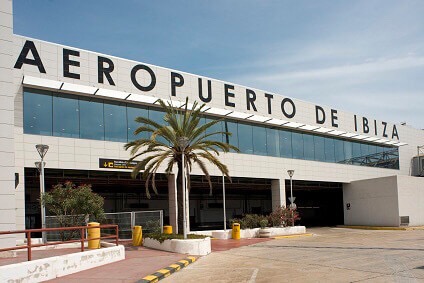
Ibiza Airport: Records Continue to Tumble

Ibiza tourist figures released this week revealed a few interesting stats for August 2017.

Hotel occupancy for August dropped 6 points to 86.87% (Airbnb? Unlicensed Villas?) yet Ibiza Airport continued to post record figures with 1,409,848 passengers arriving and departing during the island’s busiest month, a 6.7% rise year on year

Ibiza Airport Figures for August 2017

  1. Spanish – 419,549, a fall of 2.6%
  2. British – 400,722, a 6.7% rise and 28.4% of all arrivals breaking the 400K barrier for the first time ever
  3. Italian – 217,822, an increase of 0.7%
  4. German – 116,145 a fall of 5.7%
  5. Dutch – 86,482 an increase of 7.8%
  6. French – 65,074 an increase of +13.1%

Ibiza Airport Records Tumble

2016 Jan-Aug – 5,322,949 passengers
2017 Jan-Aug -5,680,475 passengers
36.4% Spanish an increase of 5.8%
25.7% British an increase of 10.5%

Emerging Markets

The Dutch market continues to boom with 70,000 more passengers so far this year, a massive increase of 22.3% from Jan-Aug while the Italian market has grown 6.1% with 697,627 passengers in the first 8 months of 2017.

Meanwhile German numbers continue to fall with a 4% decrease to 455,614: 20,000 less than 2016. If this trend continues then the Dutch market will overtake the German within the next 2 years

Sixth on the list is the French market which continues to grow although it is still a long way behind the others.  216,730 French passengers passed through the airport in the first 8 months of 2017, 11.2% more than in the same period of the previous year.  The best of the rest are much further behind: Switzerland, with just over 120,000 travellers in the first 8 months of 2017, while Belgium is approaching 100,000.

Russians and Americans

The much lauded Russian and North American markets only accounted for 2391 and 278 passengers respectively in August 2017 although many come via connecting flights from Madrid and Barcelona so will be included in the Spanish figures.


Source: Diario de Ibiza

San Antonio Town Hall Shenanigans

Strange things are happening in San Antonio Town hall. Last week saw town planning councillor Juan Jose Ferrer resign after he was undermined and overruled by the deputy mayor making his position untenable.

Spanish local council elections work on proportional representation where political parties produce a list of candidates so after all votes are counted and divided by the number of seats available giving the number of votes required to obtain 1 seat. So for example: If the equation is that you need 400 votes to secure one seat then if your party gets 2000 votes then you get 5 seats.

All very straightforward you would think although many who appear on the candidates list have no intention of ever serving in a government for a myriad of reasons. Maybe they are a doctor or a teacher or a physio and don’t want to give up their profession and sit in a council office for 5 days a week getting ridiculed on social media. They are there only to give their support for the team they represent, cheerleaders if you will.

To refresh your memories, in the 2015 election no party won an outright majority of 11 seats in a 21 seat council. The results were as follows.

So the 3 smaller parties who won 13 seats between them joined forces in a coalition to form a government, very similar to what happened in the 2010 UK election where Conservative and Liberal got into bed together even though they had vastly different agendas.

Within a few days of the new governing forming the number 2 on the PSOE list, the charismatic Marco Guerrero, had been headhunted by the newly elected Balearic Government. Marco was one of the main reasons why many voted for PSOE in San Antonio but within days he was gone and replaced by Lorenzo Bustamente who’s like a wet weekend in Skegness by comparison.

Now back to Sr Ferrer. His little row with Deputy Mayor Pablo Valdes meant that he spat out his dummy and legged it so there’s now an empty place at the council top table. In accordance with protocol the position was offered to number 4 on the list, Paquito Fernandez, a popular local physiotherapist who didn’t fancy the job. Number 5 wasn’t interested either nor was number 6 so number 7 the polarising ex councillor and souvenir shop owner, Joan Torres has graciously accepted the place on the government team.

So what does all this mean? Probably nothing to most of you who couldn’t give a monkeys toss about small minded politics in Ibiza however these are the people deciding on the future of one of the most famous towns in tourism and they weren’t even the ones who were elected in the first place.

So next time your’e in San Antonio and you haven’t got a terrace to sit down on at 12.01am or you get harassed by a street seller or your pocket gets pinched at the bottom of the west end or you can’t get your rubbish in the skip because it’s overflowing then remember these people.

Some of them are there by default and are making decisions that affect residents and tourists on a daily basis. It’s called democracy but many in San Antonio are scratching their heads and wondering what crisis is coming next from the coalition council.