There’s something almost poetically tragic about Ibiza’s housing crisis. An island where there’s always room for another luxury villa, but apparently not for the people who live here.
Finally the island has reached the point where the majority of politicians agree that housing is an emergency. They agree that young people are struggling. They agree that workers can’t afford to live and yet, when someone announces a major new housing development, they nobody can agree on who deserves to live in it.
The good news is that the Spanish Government plans to develop 532 affordable homes at Can Escandell, with construction expected to begin in 2027. Sounds positive, doesn’t it?
Well, not according to the Partido Popular, Ibiza’s centre right ruling party. Mariano Juan, the PP’s island policy spokesperson, has criticised the government’s approach because residents of Ibiza won’t receive priority when applying for the homes.
His argument is straightforward: people who already live, work and have built their lives on the island should be given preference, particularly young people struggling to establish themselves.
The PP says its own public housing schemes require a minimum of ten years’ residency and, this is where things get interesting because how long do you need to live in Ibiza before you qualify as someone who belongs?
Ten years? Twenty? Born here?
Or does the island need to check whether your family tree includes a fisherman, a farmer and someone who once worked at Space?
Should we introduce a residency points system?
Born in Ibiza: 100 points. Parents born in Ibiza: another 50. Worked three seasons as a worker and lived above the Ship Inn? Congratulations, you’ve earned a chance to share a two-bedroom flat with six other people.
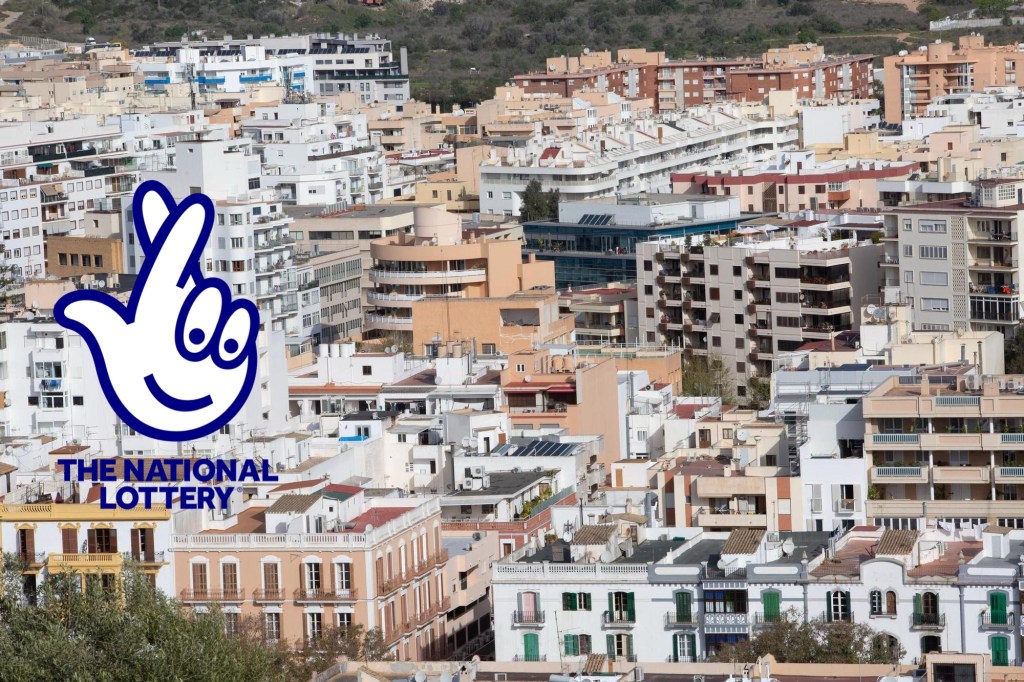
Meanwhile, the rest of Spain can apparently apply, so if you are currently working on a building site in Asturias then get your name down for a little Ibiza pied-à-terre by the sea because it appears to be a housing lottery, but with a slightly more complicated entry form.
The uncomfortable truth is that Ibiza’s housing crisis isn’t simply about who gets priority for a new apartment. It’s about how an island that has become incredibly successful at attracting money has become increasingly difficult for ordinary people to live in.
Teachers. Nurses. Hospitality workers. Police officers. Young people whose families have been here for generations. People who keep the island running but increasingly can’t afford to remain here.
The latest housing data makes grim reading. Ibiza’s housing deficit is estimated at 43%, while the average price paid for a property by foreign buyers in 2025 was €548,662, compared with €304,120 for Spanish buyers.
So while the political parties argue over residency requirements, the fundamental question remains: Where are the people who work here supposed to live?
The Government says it is building and the PP says residents should come first while the Balearic Government has its own proposals and somewhere in the middle, a young Ibicenco is probably looking at a €2,000 PCM rental advert and wondering whether moving to the moon might be more affordable.
The political arguments will continue. They always do but building 532 homes is only part of the answer if the people who need them most cannot access them and if Ibiza wants to remain more than a luxury playground with a permanent workforce, it needs to address that problem sooner rather than later.
The bottom line is that a destination that can afford million euro villas but cannot house its own workers has a fairly serious identity crisis.
The new Ibiza motto: Where you come to find yourself, then lose yourself trying to afford the rent.
What’s your view? Should priority for public housing be given to long-term residents of Ibiza, or should access be based on other criteria?

 MAN IN SAN AN by Martin Makepeace