I’ve just got back to Ibiza after a few days in the UK. The plan was simple: watch some cricket, catch up with family and friends, then head back to the White Isle.
To my surprise it was hotter in the UK than Ibiza. Now, that sounds like a dream but believe me it wasn’t.
Ibiza and the UK have something in common. Neither has a clue what to do when the weather steps outside its comfort zone.
Give Ibiza a bit of rain and the roads become rivers, traffic grinds to a halt, houses leak like sieves and everyone acts like they’ve just witnessed a biblical event.
Give Britain 35°C and the entire country collectively loses its mind. Schools close because classrooms become ovens. Trains are cancelled because apparently steel rails have trust issues. Offices become sweatboxes because air conditioning is still considered some sort of American luxury. Every pub beer garden is packed with people whose skin has turned fifty shades of lobster.
And let’s not forget the fashion. Brits have approximately three days a year to wear shorts, so every pair ever purchased since 1998 suddenly makes an appearance. Hawaiian shirts emerge from wardrobes, flip-flops are worn into supermarkets and there’s always one bloke who decides the local Tesco is an acceptable place to wander around without a shirt. Spoiler alert: It isn’t.
The irony is brilliant. People spend thousands flying to Ibiza every summer chasing sunshine, yet the moment the UK actually gets some, the country starts melting faster than an ice cream in Benidorm.
Maybe that’s just how we’re wired. Ibiza was built for heat. The UK was built for drizzle. Swap the weather around and both places descend into glorious chaos.
Ibiza’s housing crisis has forced politicians into increasingly bold decisions, and this could be one of the biggest yet.
Four of the island’s five municipalities have now approved plans to unlock areas of ‘suelo rústico’ (rural land) so they can be used for affordable housing (VPL) under the Balearic Government’s new Strategic Residential Projects scheme. The aim is simple: get more homes built, faster, and at prices below the open market.
The proposals cover Ibiza Town, San Antonio, San Jose and Santa Eulalia. Each municipality will now identify specific transition areas close to existing urban zones where development can take place over the coming months.
Supporters argue Ibiza has reached the point where extraordinary measures are needed. Young people, key workers and even middle-income families are increasingly priced out of the island they grew up on. The Balearic Government believes these homes could be sold for around 30-40% below current market prices, offering residents a realistic route onto the property ladder.
Some councils are also proposing strict residency requirements. In Ibiza Town, there are calls for buyers to have lived in the municipality for up to 10 years, while San Jose wants similar long-term residency rules. Santa Eulalia has gone further, insisting every property will have public protection and at least half will be for affordable rental.
But not everyone is convinced.
Opposition voices argue that the plan opens a can of worms such as more construction on precious countryside, fuels private development and still won’t produce homes that many residents can genuinely afford. Environmental concerns have also been raised over the loss of rural land on an island already struggling with infrastructure, traffic and water resources.
It’s a debate that perfectly sums up modern Ibiza.
For years we’ve all complained there aren’t enough homes. Now politicians are proposing to build them, many are worried about where they’ll go.
The real question isn’t whether Ibiza needs more housing. Almost everyone agrees it does. The real question is whether this plan strikes the right balance between protecting the island’s landscape and ensuring the people who keep Ibiza running can actually afford to live here.
One thing is certain: doing nothing is no longer an option.
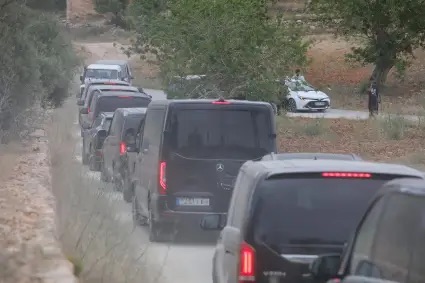
It’s been in the local news all week, but the story of the illegal mega-party shut down in the Ibiza countryside keeps raising new questions.
What initially sounded like an unauthorised gathering has turned out to be something far more elaborate: around 1,000 attendees, multiple dance areas, bars, food vendors, medical staff, an ambulance, a fairground ride and up to 15 DJs.
This was not a spontaneous gathering. It was a fully-fledged commercial event.
Much of the attention has understandably focused on the organisers, who face potentially severe penalties of up to €300,000 but perhaps the more interesting question is whether everyone involved in making the event happen should also face consequences because events of this scale do not materialise out of thin air.
Somebody supplied the sound systems. Somebody built the stages. Somebody arranged the lighting. Somebody provided the bars and catering. Somebody hired the medical teams and ambulance and somebody stood behind the decks entertaining the crowd.
For years, many of those involved in illegal parties have been able to distance themselves from responsibility by claiming they were simply providing a service. DJs in particular have often argued that they were booked to perform and had no knowledge of the legal status of the event but at what point does that defence stop being credible?
A professional DJ arriving at a remote finca and finding hundreds of people, multiple dance floors, bars, security staff, food outlets and festival-level production should surely be asking questions. The same applies to suppliers providing equipment and services.
Ignorance may be a reasonable defence when playing a private birthday party or wedding. It becomes much harder to accept when confronted with what is effectively a small music festival operating in the countryside.
The reality is that licensed venues in Ibiza spend millions complying with regulations, safety requirements, licensing conditions, taxes and employment laws. Illegal events avoid many of those costs while competing for the same customers and that is why growing calls to blacklist DJs and suppliers linked to illegal parties deserve serious consideration.
Promoters can disappear overnight. Companies can be dissolved. Social media accounts can be deleted. A DJ’s reputation, however, is often their most valuable asset. Perhaps it’s time for responsibility to extend beyond organisers alone.
Before accepting a booking, professional DJs, production companies, sound providers, security firms and other suppliers should be carrying out basic due diligence. Is the venue licensed? Does the event have the necessary permissions? Who is organising it? Are the appropriate safety measures and permits in place?
These are questions legitimate businesses ask every day.
If suppliers know they risk losing future bookings, damaging their reputation or even facing legal consequences for participating in illegal events, they may think twice before getting involved and that could prove far more effective than chasing organisers after the fact.
The authorities deserve some credit for shutting this event down, but preventing the next one may require a different approach. Illegal parties survive because they rely on a network of professionals willing to provide services.
If that network starts demanding proof that an event is legal before agreeing to participate, the business model quickly becomes much harder to sustain because one thing seems increasingly clear: nobody accidentally organises a thousand-person rave complete with bars, food outlets, medical teams, famous DJs and a carousel.
And nobody involved should be able to pretend they didn’t notice what was happening around them.
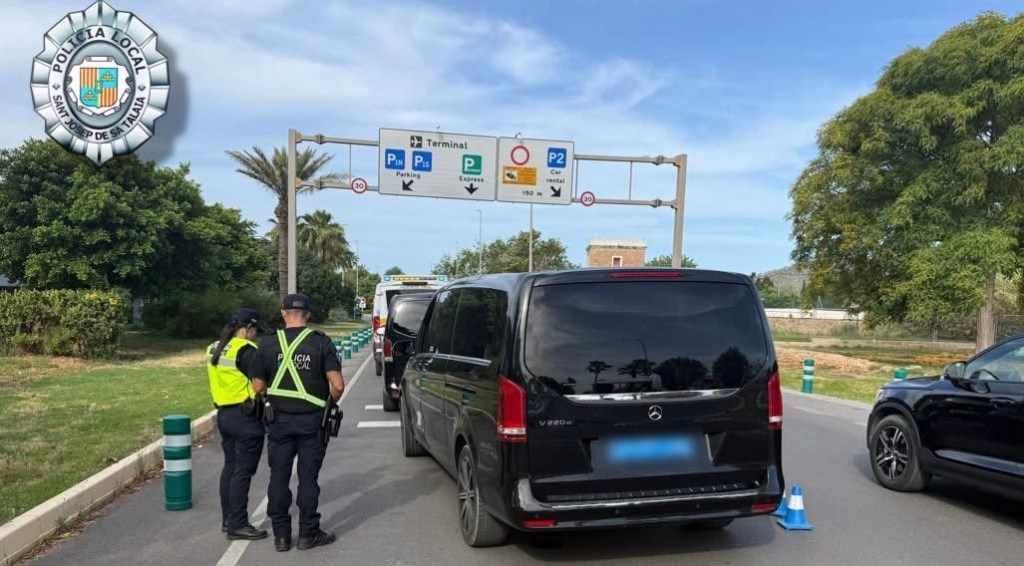
Two private hire vehicle drivers (black minivans with blue number plates) have been caught transporting passengers while under the influence of cocaine during transport inspections carried out by Sant Josep Local Police over the weekend.
The discovery raises serious questions about passenger safety on Ibiza’s roads, particularly as both drivers were actively working and carrying customers at the time they tested positive.
Police described driving under the influence of narcotics as a direct threat to the safety of all road users and stressed that professional drivers have an even greater responsibility when transporting members of the public.
The incidents comes during what looks to be another incredibly busy summer on Ibiza’s roads when thousands of residents, workers and tourists rely on taxis and licensed minivans to move around the island safely.
While much attention is often focused on drink-driving campaigns, these cases serve as a reminder that drug-driving remains a significant and often hidden danger. Passengers stepping into a vehicle expect the person behind the wheel to be fit to drive, not under the influence of illegal substances.
The fact that these were professional drivers carrying paying customers makes the offences particularly alarming. It also raises the question of how many more impaired drivers may be slipping through the net.
The message from the authorities could not be clearer: drugs and driving are completely incompatible.
Sant Josep Local Police have confirmed that preventative transport checks will continue throughout the summer as part of efforts to improve road safety.
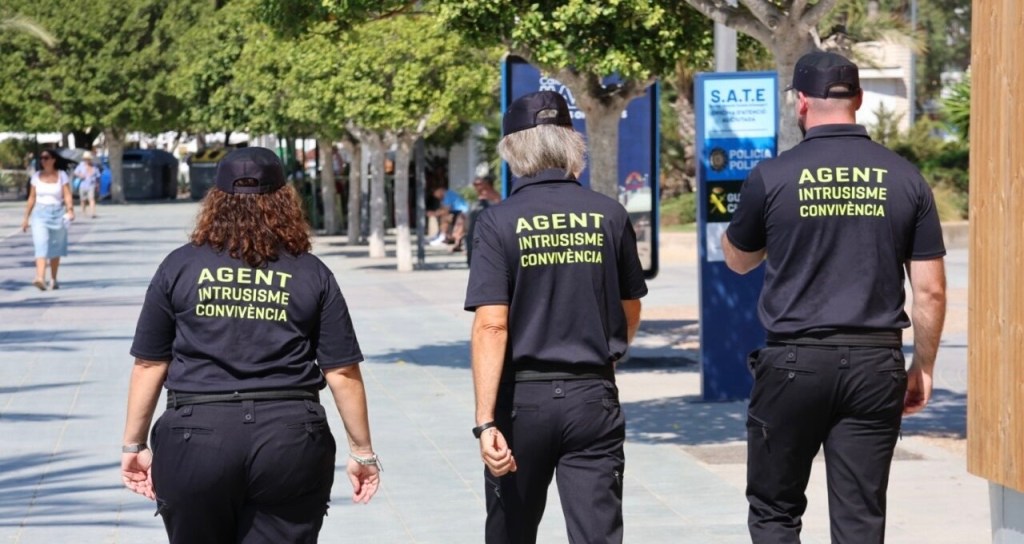
Ibiza is turning up the heat on intrusismo, the catch-all Spanish term for illegal or unlicensed business activity, and this time they’re not messing around.
Fines of up to €500,000, more inspectors on the ground and a wider crackdown targeting illegal holiday rentals, rogue transport operators, unlicensed boat charters and underground commercial activity.
For years, residents, legitimate businesses and parts of the tourism industry have complained about people operating outside the rules while everyone else plays by them. Illegal rentals can distort the housing market. Unlicensed operators create unfair competition. And when safety standards, taxes and regulations are bypassed, somebody usually pays the price.
Ibiza, in particular, knows this battle well. The island has spent years tackling illegal tourist accommodation and is increasingly being presented as a model for the rest of the Balearics. Now, with the number of inspectors rising from five to nine locally and more enforcement resources across the islands, authorities clearly mean business but there is another side to this debate.
Critics will ask whether Ibiza risks drifting towards a culture of over-regulation and bureaucracy. Is every problem solved by more inspectors, more paperwork and bigger fines?
Some small business owners, freelancers and operators working in Ibiza’s famously complex seasonal economy may worry about where the line is drawn. In an island environment already packed with licences, permits, regulations and administrative hurdles, there’s a legitimate concern that enforcement can sometimes feel blunt rather than nuanced.
There’s also a broader question: are authorities tackling the causes, or simply the symptoms?
Take illegal rentals. Enforcement matters, few would argue otherwise, but does cracking down alone solve Ibiza’s housing crisis? Or does the island also need a deeper conversation around planning, affordability, workforce accommodation and tourism capacity? The truth probably lies somewhere in the middle.
Most people support targeting genuinely illegal operators who undermine safety, dodge taxes or exploit loopholes. At the same time, enforcement only works when rules are clear, fair and realistically achievable.
Protecting Ibiza’s tourism model is important. So is protecting entrepreneurship, practicality and common sense.
The real challenge is finding the balance and on an island where tourism, housing, business and regulation collide every single day, that balance is never going to be simple.