
Why Does San Antonio’s Council Dislike British Tourism So Much?

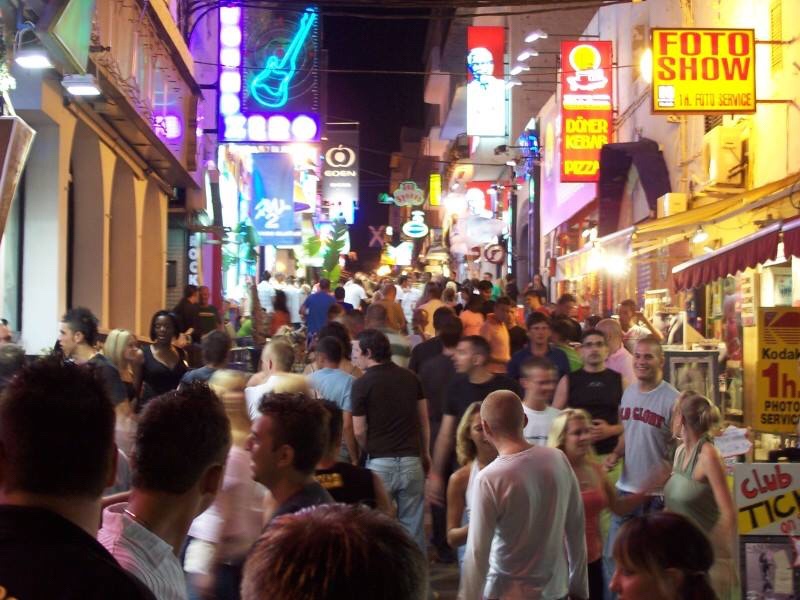
The new noise laws for San Antonio means all bars & clubs in the West End area need to close by 3am and terraces removed by 12am midnight. This only applies to the West End which is a few blocks wide but makes up the heart of San An’s ‘old town’.

To get the new law passed through as quickly as possible before summer 2018 the 3-party coalition council has designated the West End area a ‘zone of special acoustic protection’ due to consistent high noise levels during the summer.

The West End and San Antonio’s relies heavily on British tourism, around 75% of all tourists who visit the town are British and many are youngsters aged 18-25 experiencing their first overseas holiday drawn to Ibiza by it’s sun and fun reputation coupled with world class clubs and the biggest names in dance music. They come to San An because it’s ticks all the boxes for their demographic and budget and many come back over and over again progressively upgrading

San Antonio has always been a gateway for this type of tourist, those that can’t afford the big bucks options that other resorts and islands offer. It’s always been this way because this is what the local hotels cater for. San Antonio only has three 4 star hotels in the whole town and this is reflected in those that come here. Even though local hotels have had a dramatic reformation over the last 15 years they are still a million miles away from being termed as ‘world class’.

So unless a raft of 5 star beach resorts open in the next 10 years then San An will keep offering the same type of rooms at reasonable rates that attract a certain demographic, the same demographic that Valdes and his honchos from the fun Police clearly don’t want. Even if the big hotel chains wanted to create a 5 star wonderland the socialist island government has a building ban in place so nothing will get built in the next few years plus it’s currently taking over 2 years to apply and obtain a licence to reform an existing hotel.

For those who come to San An and don’t have the cash to book VIP tables at Ibiza’s super clubs, the West End offers drinks and bright lights that is a beacon for fun at a very reasonable price. Love it or loathe it, it has always had a place in the Island’s dynamic….until now.

Over the last few years its sad to say but the West End has gone downhill fast, quickly degenerating into a ghetto where police are rarely seen leaving a lawless vacuum. The West End’s failure to police itself has resulted in 3 major problems:

1. Unscrupulous bar operators and their PRs forcing cheap drinks deals on naive youngsters who end up in a drunken state.

2. Organised prostitutes on every corner hassling passers by and robbing those too drunk to notice or defend themselves

3. The same gangs of pickpockets waiting near the Taxi rank on a nightly basis preying on young tourists just out to have a good time.

4. The ‘looky looky’ men are now peddling laughing gas to naive youngsters, even though it’s illegal and leaves a mess behind the local authorities don’t seem too interested in tackling the problem.

These issues are not dissimilar to many other Mediterranean resorts however rather than confront the criminals and the lawbreakers Deputy Mayor Valdés has declared war on the bars of the West End so in turn will penalise those tourists who frequent and enjoy them, the majority of which are British.

Sr Valdés clearly dislikes the tourism that San Antonio has thrived on for decades and has used the complaints of ‘147’ residents to justify his actions. Let that sink in a minute: 147 residents who live in an area that is famous for bars and has been for nearly 50 years. 147 residents in a town that relies 100% on tourism. 147 residents who need to be protected but also who live in the middle of a ghost town for 7-8 months a year. Their petition of just 170 signatures has been taken more seriously than the 1300 presented by the market stall holders and my own of over 2000 asking for action against the aggressive street sellers, I didn’t even get a reply.

You couldn’t really make it up but that’s the conundrum of San Antonio, a council that constantly bites the hand that feeds it and who yearn for those ‘nice’ families and middle aged/elderly couples who choose to visit Santa Eulalia for 4-6 months a year.

While Sr Valdés focusses his iré on British tourists, culling the enjoyment of youngsters and ruining the livelihoods of many honest bar owners (Spanish and foreign) the true criminals haven’t been mentioned so will be free to roam around and do their ill deeds with very little Police presence.

This is unforgivable: this council who love to take away but give nothing back. 147 residents may be affected by the extra noise for 4 months but how many young tourists are affected on a weekly basis by the unchallenged criminals. Many more than 147 I would imagine but they aren’t voters are they and they were probably drunk so ‘deserved’ it in the eyes of this council.

Without doubt San An needs cleaning up and that’s the elected council’s job but address the real issues first rather than target legitimate businesses built up over decades, who employ many and add to the town. San An has plenty of problems that need addressing but a few extra decibels for 4 months a year isn’t the real issue here.

Catalan Language Sparks Ibiza Health Crisis

The Balearic governments obsession with public workers speaking Catalan has reached crisis level at Ibiza’s Can Misses hospital.

3 weeks ago the Balearic Health Board approved a decree with a minimum requirement of the Catalan language to be able to work in the Balearic health service which has caused many non-Catalan speakers to consider their position.

Although 75% of the trade unions voted against, the decree was passed thanks to a single vote in favor by the current socialist government led by PSOE’s Francina Armengol with the support of MÉS and the left wing Podemos.

With this strict new language criteria coupled with the continuing housing problems some health professionals have decided to move away from the island rather than study Catalan.

Neuropediatrician Ileana Antón from Argentina is one such example: “I’m not against Catalan, I am against it being a requirement to get a job, it is against my principles that I am valued in a different way because I do or don’t speak a language”.

Anton continued: “To put it as a requirement seems to me to be a supreme level of ignorance. Those who are managing public health are doing it from their ideology and not thinking about whether the service is quality for patients”.

Anton’s boss Bartolomé Boned, is from Ibiza and he thinks the same, lamenting that it’s difficult enough already to attract trained professionals without putting any further obstacles in the way: “it’s going to be even more difficult because we’re creating a problem where there wasn’t one”. Only 5 out of 7,000 complaints received by the Balearic public health service were because the professional did not know how to speak Catalan.

“The language of a doctor are the signs and symptoms of diseases,” believes Ileana: “If Messi doesn’t have to speak Catalan to play for Barça, I don’t know why I do to be a doctor In ibiza”.

The sad truth is that 18 emergency service physicians have left the island in the last 7 months and currently there are 8 vacancies with little hope of filling them. Most of the 21 professionals who work in this service do so with a temporary contract, none are from the Balearics and only 2 currently have the required level of Catalan. Meanwhile there are waiting times of up to 8 hours in the emergency room. “The situation is critical” said Anton.

Source: El Mundo

3am Closure for San An’s West End

San Antonio council has confirmed that they will push through new noise laws in time for summer 2018 and it’s not good news for the West End. The coalition council has decided to act after acoustic tests in the town last summer showed that the area was exceeding current noise laws by up to 20 decibels.

The new proposals will see all bars and clubs in the West End area (Calle del Mar to Calle Progreso and Calle Antonio Riquer to Calle Balanzat) shut by 3am with all terraces closed and removed by 11pm. Bars will also have to invest in sound proofing and install noise limiters which can be closely monitored by the local authorities. What’s more the council have said that no more licences for music bars or restaurants will be granted.

Mayor Jose Tur said that 147 residents are currently affected by the noise from this area with councillor Pablo Valdes adding that the excess noise is like a train passing by your bedroom window.

This hard line approach has many bar owner/operators questioning whether the famous West End has a future. Last August saw terraces close at midnight which had a dramatic effect on many establishments.

In the new ordinance the government has made no mention of the criminal elements that has blighted the West End for the last few years. Rather than focussing on removing the criminals they appear to be trying to remove the people that the criminals prey on.

West End Opening Hours to be ‘Significantly’ Reduced

San Antonio council are set to introduce more hardline measures to curb the perceived excesses of the town’s famous West End area.

A new 3 pronged attack will see bars having to invest and install new sound proofing comparable to large nightclubs as many are already ‘de facto discotheques’ according to the council.

The big news will see a major reduction to the opening hours with Councillor for the Environment Pablo Valdes saying they will ‘have to be significantly lower’ than the existing 5am closing time as the ongoing noise problems in the town has it’s origins firmly in this area.

finally, a hardening of economic sanctions is expected for bars and individuals who violate noise regulations with small fines being replaced with more immediate action.

These measures are a continuation, added Valdés, of others already adopted by the San Antonio coalition council such as the pedestrianisation of several streets in the West End area and the reduction of the terrace hours.

The government team has been carrying out technical studies and diagnostics for two years and want these new measures “to represent a real change” that goes beyond the traditional declarations of good intentions, it also hopes to have the support of the opposition party so that these interventions endure over time.

The noise measurement stations installed this summer in the West End confirmed that the regulation on noise pollution is systematically violated. The records reached 85.9 decibels, 20 more than allowed. The results of 2017 corroborate the analyses carried out in 2016.

Source: Diario de Ibiza

Comment: Whether you are a fan of the West End or not it seems that San An’s Council are determined for things to change but are targeting local businesses yet again rather than the blatant crime and misdemeanours that occur on a nightly basis in that area. The West End has always been a first port of entry for many youngsters on the island who then come back every year but with little to no control over the last few years it’s disintegrated into an anything goes environment. The coalition government team seem to think that by focusing on closing the West End this would remove the problem but by doing so reduces a historical part of the town. Wouldn’t more positive policing on the streets be a better option?

No More Extensions for Amnesia and Privilege

IMG_5764

San Antonio Council are due to meet on Wednesday 29 November to vote on the new noise control proposals which they hope to push through for summer 2018.

Part of the new laws will see the super clubs in the municipality (Amnesia, Eden, Es Paradis and Privilege) denied extra hours for any special occasions including their opening and closing parties with the latest opening time for all clubs in San Antonio to be set in stone at 6am.

San Antonio’s 3-party coalition government believe that any club extension hours only brings inconvenience to residents and is counterproductive for the change of tourism model that it wants to promote in the municipality.

SOURCE: DIARIO DE IBIZA

Brexit Meeting Overview

Lloyd Milen, Consul General for the Balearics hosted a Brexit meeting today at San Antonio town hall for British nationals living in Ibiza,  the meeting was well attended by over 50 people mainly of retirement age.

The message from the British Consulate was upbeat and Lloyd opened the meeting by saying that the British government recognised how emotive the issue was but some clarity is now starting to emerge.  He also stressed how important the feedback was from these meetings of which he and his colleagues had undertaken over 70 in recent weeks. Indeed, one point that was raised at a similar meeting in Palma is now part of David Davies’ negotiating process.

Milen explained that Brexit negotiations are very complex with an ‘immense amount of work’ being done by the UK government. He also clearly stated that although negotiations are ongoing it’s important to remember that ‘nothing is agreed until everything is agreed’.

His message was that the Spanish authorities are keen to help and are working in everyone’s best interests, Lloyd pointed out that Spanish Foreign Minister Alfonso Dastis recently appeared on BBC1’s ‘Andrew Marr Show’ and when asked about the Brexit situation between the 2 countries he said “We will make sure that the lives of the UK people in Spain is not disrupted, the relationship between the UK and Spain is a very close one” he continued, saying “17 million Brits come to Spain every year and many of them live and retire over here and we want to keep it that way as much as possible”.

The more detailed areas that were talked about were as follows

1. Healthcare: it has been agreed in principle that the EHIC card will be replaced by something similar so UK visitors are covered by a reciprocal agreement when visiting Spain

2. The British Government currently pays the Spanish government over 3000 euros per year per pensioner for healthcare while they live in Spain and this totals over 200 million euros. Even though this comes under an EU directive the deal is private between the 2 countries and this will continue.

3. There is a broad agreement that existing UK state pensions won’t be frozen for UK residents living in Spain and that pensions can continue to be ‘pooled’ where contributions are from 2 or more countries.

4. The conditions for people of ‘working age’ are due to be negotiated at a later date.

5. There’s a will between both countries to continue with reciprocal working practices.

6. The UK is looking to bring in a register for EU nationals living and working in the UK, similar to the padron system in Spanish municipal towns.

7. Anybody thinking of changing to Spanish Nationality should seek legal advice as this has far reaching consequences especially for pensions and inheritance.

8. The British Consulate stressed that the single most important thing was to make sure all British nationals had their Spanish paperwork in order so that your rights as a Spanish resident are protected.

9. With regards to point 8 it’s very important to renew your ‘padron’ with your local council EVERY YEAR to ensure you are still in the system especially if you have had no recent dealings with your local town hall.

10. The best place to seek out the correct information isn’t sensationalist stories on the press front page but from the website www.gov.uk which details of all ongoing negotiations plus a mailing list with all Brexit updates as they happen.

11. The Facebook page ‘Brits in Spain’ is also a good source of information straight from the horse’s mouth.

12. Taxation laws have nothing to do with BREXIT

13. The British make up the majority of foreign nationals living in Spain so the Spanish government has done more than any other country with respect to negotiations.

14. Spain has indicated that they want British nationals to be able to continue to vote in municipal elections but this has yet to be confirmed.

Overall the information that flowed was of more detail than the curious meeting earlier in the year where most questions were answered with ‘we don’t know yet’.  Although anything can happen in politics it appears that negotiations are moving on well with plenty of goodwill on both sides. The British Consulate again stressed the importance of following news on the Gov.uk website and promised updates whenever was appropriate.

British Govt to Host Brexit Meeting in San Antonio

On Wednesday 22 November at 11am in San Antonio Town Hall the British Consulate will host an open public meeting for all British Nationals living in Ibiza to try and ease concerns over the UK leaving the European Union.

Cónsul General Lloyd Milen and Vice cónsul Lucy Gorman will be given the thankless task of putting themselves in the firing line and unless they know something we don’t expect plenty of ‘we are not sure’ and ‘we can’t say’ with the odd ‘that remains to be seen’ thrown in for good measure.

Even though they won’t have the answers to many questions this hard working duo will be the public face of the UK government in the Balearics during Euro-British negotiations and are trying to keep residents updated in a formal and human way.

This is just the first of many meetings but if you are genuinely concerned about your rights as a British National living in Spain then an hour of your time might be well spent listening to what the UK government has say rather than reading the sensationalist press.

Note: I did say ‘might’ and didn’t even mention the B-word once (title notwithstanding)!

Mayor is Confident of a ‘New’ San Antonio within 3 or 4 years

San Antonio Mayor José Tur ‘Cires’ is confident that by following the guidelines set out in the town’s strategic plan significant changes will be seen from 2019 onwards and hopes to see a much changed San Antonio in 3 or 4 years with a different West End and a different type of tourism that allows for the recovery of businesses in the town centre, many of which have closed down.

The coming years will see many projects undertaken such as the redevelopment of the bay area plus the refurbishment of the former town hall building opposite the fountains in order to move some services there. A more immediate change will see the relocation of the Local Police to new offices in calle Alicante which are “more modern with easier access and will provide a better service to citizens”.

Tur stressed though that the strategic plan will not end all of San Antonio’s problems or its degraded image although it does give the town the chance to change course. The plan is a tool for citizen participation where important guidelines have been set out and a picture of the current situation has been made with its shortcomings and difficulties with clear objectives to be achieved.

“The strategic plan has to be a guideline for us as a government team and for future governments,” said Tur with the intention to improve tourism in San Antonio, “look for a more family orientated tourism, with a greater purchasing power that allows for the improvement of the town centre and look for a formula that’s more respectful for local residents who live there”.

When questioned about the future of the West End and it’s place within the plan the Mayor pointed out that the area needs to “improve” in order for the town (which was the island’s first tourist destination) to get back to when there were people living, there were restaurants and a normal life; In short, look for a way that allows businesses to work so that residents can also live with peace of mind “.

He also explained that a significant number of West End business owners realise that they can’t continue in this way and that they have to change course “although there’s a lot of foreigners who only think of a quick and easy profit but we don’t agree with this as it does not suit anyone”.

Facing up to the type of tourism that San Antonio currently receives, the Mayor understands that it equates to the type of accommodation on offer and although there has been very few hotel refurbishments in the last couple of years this will change this winter. According to Tur, 30 hotels or hostals around the town intend to undertake works to improve quality and “that will attract less unwelcome tourism, so we have already started on the road to recovery”.

SOURCE: NOU DIARI

The Curious Case of Carles Puigdemont

carles-puigdemont-declararemos-la-independencia-en-cuestion-de-dias.jpg

I’m sure that in the mind of ex-Catalan leader Carles Puigdemont he saw himself as a Che Guevara type figure, leading his people out of the oppression of a totalitarian state, to be their saviour lauded forever and a day with statues erected and even a bank holiday named after him.  That could still happen but history has a funny way of remembering events and people and usually only remembers the victors.

I must declare early in this piece that I don’t have much empathy with the Catalans although I adore the city of Barcelona and the coastline all the way up to France but I have had several run-ins over the years which have framed my mind into the way Catalan people think and act and lets just say we aren’t entirely on the same page. They have their way and I have mine is probably a politer way of putting it.

That being said I also accept that people have the right to map their own future as long as it’s within the framework of the law of the land and this is where Sr. Puigdemont’s cunning plan comes crashing down. Unlike Guevara we aren’t talking about an oppressed state wracked with poverty and starvation, we are talking about Catalunya, one of the wealthiest parts of Spain that already has a standard of living far superior to many other places within the Kingdom.

Imagine if the SNP of Scotland or Plaid Cymru of Wales called a snap referendum where only 43% of the electorate voted and then decided to declare full independence based on the 90% voting yes, regardless that this only represented 38% of the electorate. Any way you care to look at it that’s a big call.  What about currency, central banks, borders, administration and everything that comes with being a stand alone republic that doesn’t have to piggy-back on the country you’ve just spurned. Hell hath no fury like a spurned partner.

Even Nicola Sturgeon, the wily SNP separatist, knew that the only way to ‘force’ a referendum vote was by political means and pressuring a minority government into concessions. The SNP got their way through tenacious politicking but Sr Puigdemont was in far too much of a hurry to go via that route.

As my good friend and Catalan resident Laurent Bates eloquently wrote a few weeks ago, the Catalans view themselves as a completely different country to Spain and that should be respected but to start a civil war on a whimsical notion no matter how romantic is just plain stupid. The response from Madrid was too heavy handed and the subsequent King’s speech to the nation too provocative but there are 3 sides to every story and this story can’t have a happy ending in the short term.

Here in Ibiza I’ve spoken to as many Spanish friends and acquaintances as possible trying to find someone who supports the Catalans and so far I haven’t found anyone (other than Catalans) and this tells all you need to know about the polarising situation we are in.

And then we have Señor Puigdemont, the floppy haired pantomime villain of the piece who instead of digging in his heels and becoming a martyr for ‘the cause’ decided to hotfoot it to Belgium at the earliest possible opportunity claiming that the justice system will be biased against him.  Of course it will be, it’s nearly always biased against people who flagrantly break the existing laws using public money to do so.

The writing is on the wall for Carles and his merry men and women in the current climate but things could change if the December elections decide so.  And that’s just it, democracy usually finds a way and if in the future the politicians agree on a referendum that is fully supported by a clear yes and no campaign then the Catalans deserve their day at the ballot box in a legal, transparent and cohesive way but as BREXIT has so far proved, be careful what you wish for.

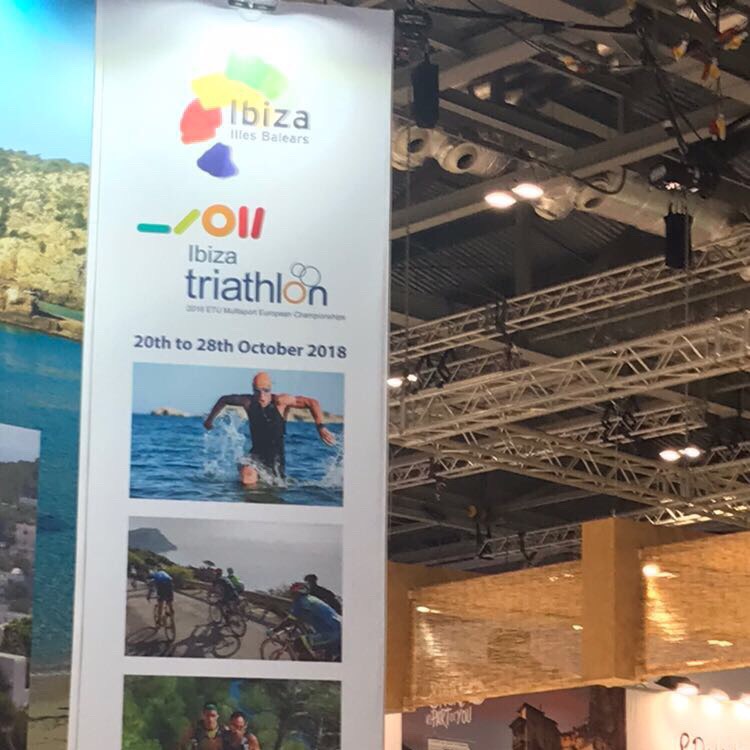
Ibiza Focussing on Sport, Culture and Wellness at WTM London

It’s that time of the year again when all the major players in the travel industry congregate in London for the World Travel Market (WTM), one of the 3 major European travel fairs alongside Madrid and Berlin.  This is where all the main people can be found under one roof room, meetings are arranged, business cards are exchanged and deals are agreed.

The main focus in London is naturally on the British market which is Ibiza’s 2nd largest in terms of incoming tourists but the mood this year won’t as upbeat as usual due to the increasing doubts over what Brexit will actually mean to the Spanish tourist industry.

Historically the WTM is all about pushing low season activities such as gastronomy, culture, sport and wellness and all these are being heavily promoted this year in London. Ibiza is now a main hub and market leader for ‘wellness’ with over 20 spas on the island, 23 ‘agrotourism’* hotels and dozens of yoga schools and retreats.  ‘Boot Camps’ such as No1 Boot Camp where people are put through their paces in a military fashion for a few days are also growing in size and demand.

The peculiar thing is that Ibiza’s world famous Super Clubs AREN’T promoted in London which is like Las Vegas not promoting casinos but it’s always been this way.  The Island’s tourist department has a very small budget in comparison to the clubs so leave them to promote themselves globally and choose instead to focus on ways to attract people to the island during winter and the the low season months, namely April, May and October.

Ibiza now enjoys more connections than ever before with Ryanair operating international flights from late March until the end of October not forgetting British Airways who operate flights from London all year round almost on a daily basis. Low season fares are usually very reasonable so the focus is on the products that hook the people to come over when the island isn’t bursting at its seams.

This year the Ibiza stand is independent from the Balearic Islands main area which shows a growing confidence and although the WTM is viewed by many as a big jolly up for the politicians (which it is) the exposure that Ibiza gets on a world business level at the WTM is important and has been increasing over the years building on the brand and trying to convince everyone that the White Isle is not all about the clubs (which it isn’t).

*Agrotourism hotels are rural retreats (usually converted from large old houses) that offer boutique style rooms for nightly rental