San Antonio’s Ferry Dilemma

San Antonio’s Ferry Terminal

The debate over the return of passenger and cargo ferries to the port of San Antonio shows no sign of letting up with the topic splitting the local community while politicians get hot under the collar.

The passenger terminal was closed by the previous San Antonio council in February 2019 for environmental reasons although the closure caused a political stir as the mayor at the time was also the president of Es Nautic yacht club who were seen as the main beneficiary of the decision.

The existing ban on ferries ends in little over 3 weeks, on 31 December, and the current incumbents of San Antonio town hall have indicated that they wish it to reopen the route although it’s a decision that comes from central authorities in Mallorca so for now it’s all about lobbying and arguing the case for and against.

In October the sitting coalition council had a rare split in its ranks when PxE voted with the PSOE/Podemos opposition to try and block the return of passenger/cargo ferries to San Antonio. Yesterday the same 3 political parties held a press conference to reiterate their position, once again citing environmental issues and saying the return of polluting ferries to a picturesque port would fly in the face of the strategic plan for the town.

The ferry companies haven’t done themselves any favours in the past using the beautiful port as a racetrack, speeding in and out like a raging bull knocking everything out the way then unloading its cargo to congest the roads. The footfall is open to debate too so many believe that ferries are of little or no benefit to the town especially when there is a custom made port only 10 miles away in Ibiza town.

Ibiza Town Mayor Rafa Ruiz has also waded into the debate saying he is in favour of a return while Sant Josep’s Mayor has said he is against. It seems everyone has an opinion but not many are aligning.

Others say that a port brings much needed business to the area and is only open 6 months a year so something is better than nothing. Even Mayor Marcos Serra is conflicted on the subject holding public meetings to get a feeling from the town, hoping that a consensual decision can be made by the local population rather than putting his head above the parapet and risking the ire of a substantial block of voters.

The decision from Mallorca will soon be made but the debate rumbles on in the island’s press, in local bars and coffee shops and in many ways has been a welcome distraction but for now San Antonio’s striking glass passenger terminal stands alone and empty, a white elephant, a beacon of the town’s ambition but also a shining example of it’s divisions.

PCR tests a step in the right direction but…

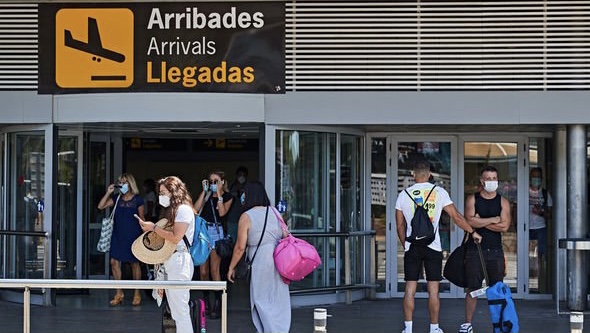
From 23 November all international travellers arriving at Spanish airports and ports from high risk countries must have a negative PCR test certificate to gain entry into the country. This certificate is a prerequisite and is included in the online form that generates a QR code that’s scanned on arrival.

Ibiza doesn’t have any international flights until January so isn’t directly affected by the new regulations but Mallorca has daily flights from countries such as Germany and Switzerland who’s passengers will now have to abide by the new rules

Other countries such as Greece have had the PCR test requirement in place since the summer but Spain in their better wisdom have only brought in the regulation now as the winter is upon us. We can argue about the timing but let’s just say ‘better late than never’.

Although the negative PCR test isn’t an ideal safety net (you could catch the virus on the way to the airport for example) it concentrates the mind and stops people traveling who suspect they have the virus but for reasons only known to themselves are unwilling to give up their holiday.

But there is one big flaw in this new cunning plan. Many countries have a lower infection rate than Spain and national arrivals, such as Madrid and Barcelona, are still allowed to come and go to the Balearic gateways without the need to show any proof of health. Recent history has shown that it is Spanish families and groups of friends who are spreading the infections more than others.

As an Island community the Balearics is in a unique position where it’s able to control it’s borders (Ibiza only has 1 airport and 2 ports) so when will the Balearic government grow a spine, start using common sense and insist that ALL arrivals, no matter if they are national or international, must show a negative test before entry is granted?

A small controversial caveat should be that Balearic Island residents are exempt from the test so that day trips and connectivity to the mainland are an option but national tourists gaining entry from Spanish airports shouldn’t be exempt especially as the numbers in their regions are so high.

Also the Balearics should follow the lead of the Canaries and not just accept the overly expensive PCR test but also the rapid 30 min tests (RDT’s) that are much cheaper and up to 80% precise. No system is infallible but the right noises must be made to deter potential spreaders from entering the islands.

This might mean that in the short term we don’t have the mass tourism that we have been used to over the last 20 years but quality over quantity is better than a 3rd wave due to a lack of courage in policing our own borders in a rigorous and effective way.

The Balearic Government hasn’t covered itself in glory during this pandemic but they now have the chance to be the authors of an economic recovery by taking the tough decisions and leading the way until a tried and tested vaccine is readily available to the masses.

Nightclubs v Beach Clubs – Ibiza’s Battle Supreme

The vaccines trials are almost over and there’s a growing confidence that summer 2021 will get us back to some form of normality but there’s an interesting local debate rumbling in Ibiza about how tourism should return after the pandemic.

Some are using this crisis to suggest that Ibiza should reset itself and emerge as a more conscientious destination, questioning the need for so many hedonistic options rather than focusing on natural, cultural and gastronomic pursuits.

Some are also putting pressure on the local authorities to regulate ‘beach clubs’ who they say operate on licences that don’t genuinely reflect what’s happening insides their venues.

Pepe Rosello, the owner of Space, has been a high profile critic of beach clubs as he sees them as unfair competition against the highly regulated nightlife sector.

In his latest open letter to the local press Sr Rosello highlighted that in 2005 the Ibiza government forced nightclubs to cover all open areas then in 2008 forced them to close from 6am to 4.30pm. This coincided with the growth of beach clubs who filled the gap for those wanting adult fun in the sun which his club particularly catered for when opening at 6am.

Rosello has also been a constant critic of Ushuaia (which isn’t surprising as this is the company that evicted him from the legendary club that he built over 3 decades) but he does come up with some valid points including that Ushuaia and other hotel venues were allowed to initially pay less VAT than some of their direct competitors (but this has now been amended).

Rosello isn’t the only one having a chip, local journalist Xescu Prats from the Diario de Ibiza has also weighed in with a veiled attack on Ushuaia and other beachfront venues who’s loud music disturbs the wider population.

What is clear is that these and others are using the pandemic to put pressure on the authorities to further regulate the leisure market to make it a more level playing field in a highly complicated and competitive area where venues operate under different forms of licence.

This story will rumble on over winter but it will be interesting to see whether the Ibiza authorities have the desire to challenge the existing order and regulate further especially as they know that devaluing your core product after the biggest crisis tourism has ever faced is a very dangerous game to play but they may also see it an ideal time to strike while the iron is hot. Watch this space.

A Ray of Hope for Summer 2021

The news has been tough reading for us here in the Balearic Islands over the last few weeks but finally we have had a couple of items of good news.

Firstly, business and government leaders in the Balearics made an announcement that went under the radar. Not only did they say that they are pushing for the Islands to get back to business at the end of March 2021 to prepare for an early easter but they also explained that they will recommend that tourists do a PCR test at origin but if they don’t then a quick test will be given at ports and at airports on arrival.

This is a very significant development as for the first time we are seeing a specific strategy put in place. There will be some logistical details to iron out but the right noises are being made about the need to get the Balearic tourist economy back up and running by working with the virus rather than waiting for a miracle cure which brings me nicely to the next piece of positive news.

A vaccine trial from Pfizer and German company BioNTech has produced very positive results with a 90% success rate. This is only 1 of 11 vaccines currently in the final stages of testing and its early days but is another glint of hope that some form of solution to the global pandemic is not a million miles away. Governments and scientists are urging caution so we shouldn’t celebrate too soon but it’s clearly a step in the right direction.

Many Ibiza residents are already in financial difficulties after the stop-start summer and it’s unimaginable what would happen if we had another one similar so these 2 pieces of news gives us hope that summer 2021 will happen on some level. As we tip toe back it might not be the mass tourism model that we have previously seen but we have to start somewhere and something is better than nothing.

There’s a long way to go but theres’s also 5 months until the start of the summer so plenty of time for these 2 things to solidify and form into definite propositions to regain customer confidence and to get the Balearic economy back into action. It will be a long road to recovery but any significant morsel of positivity is always more than welcome.

New State of Alarm but with a Difference

It wasn’t entirely unexpected but it was still a blow when Spanish PM Pedro Sanchez announced on Sunday of a new national state of alarm (SOA) to start immediately.

This one is different. Unlike the last nationwide lockdown when families were unable to leave their homes for 7 weeks this version allows movement, shops and restaurants to stay open and, importantly, the measures will vary from region to region depending on the severity of the situation in specific geographical areas.

The only common feature is a national curfew from 11pm to 6am although regions have the power to change this by 1 hour either way. Cataluña for instance have imposed a 10pm-6am curfew whereas the Balearic Islands have now opted for 12am-6am after an appeal from business owners. The Canary Islands are exempt from the new regulations due to low contagions.

The SOA has been introduced for an initial period of 15 days however the Spanish government has said that it intends to keep it in place for up to 6 months in an effort to flatten the curve of the virus that has seen a 2nd wave take hold of large swathes of Europe and beyond.

Even though this is a political tool to give local governments the power needed I would have preferred an extension for an initial 3 month period. 6 months strays into May 2021 which is the traditional start of the summer season in Ibiza and any encroachment into this month sends out the wrong message so far in advance especially when things can change quickly, as we saw last summer.

Spanish regional governments now have the legal powers to bring in any new measures necessary to zones and neighbourhoods within their region such as what we have already seen in Ibiza when the urban areas of Ibiza Town and San Antonio were put into lockdown for 2 weeks.

Regions also have the power to close their borders to neighbours with higher virus numbers (something the Balearics haven’t done). Spain will now fight the virus on a local level. level overseen from Madrid.

For us here in Ibiza all eyes will be on Francina Armengol and her Balearic coalition government to see if they can get the numbers down and Ibiza back to business. As the Canary Islands have shown, the new local rules can be used for our benefit due to the unique geography of the islands.

The Balearics now have autonomous control over who comes in and out of the islands so can bring in rules to suit any situation. The big question is whether our regional and local government have the will and understanding to take the big decisions that can get us out of this mess?

Ibiza’s Winter of Discontent

It’s now over 6 weeks since the end of the shortest Ibiza summer on record. The fact that we had any summer at all was a bonus but that doesn’t make it easier, as the temperature gets cooler we are now staring a long anxious winter squarely in the face.

Many on the Island haven’t worked since October 2019, almost a year. How are people managing? Is it savings, is it handouts, is it a black economy? I can’t help thinking this is an island in denial, carrying on regardless faced with the biggest crisis of a generation while posting old photos through misty eyes. But what else can we do but soldier on and hope for the best?

The Balearic Islands (along with the Canaries) are unique within the economy of Spain in that they rely almost entirely on tourism and for that market this is the perfect storm. European governments’ strategy of ruling by fear means that many are now petrified of setting foot in an airport even though the stats show it’s virtually impossible (27 million to 1) to contract the virus while flying.

Press reports say that a vaccine is ready now but won’t be rolled out until Christmas or the new year at the earliest. This is a thorny issue as there are plenty of anti-vaxers out there especially as it’s been rushed through but it’s probably the best bet to get back to relative normality.

As always it’s the not knowing that’s the most damaging and it’s especially difficult when the mainstream media has it’s own agenda of shock and awe whilst armchair experts on social media are ready to troll anybody who doesn’t see it their way. Faced with exactly the same problem, worldwide governments have been doing things completely differently, making it up as they go along as there is no precedent. This tells us that nobody really knows what the best course of action is.

For now it’s time to batten down the hatches, cut our cloth accordingly and get through this winter of discontent as best we can – something that many are already accustomed to doing on an island with seasonal work.

Patience is a virtue and as history has shown it’s only a matter of time before we will get back to normal. Not even a virus can take away Ibiza’s natural beauty, location or work ethic and before we know it, it will be time for the White Isle to rise once again and show the world what it’s made of.

The Road to Hell is Paved with Good Intentions

Just when we thought the situation in Ibiza couldn’t get any worse. After not being allowed out of our homes for more than 2 months and after dubious political decisions curtailed the summer we now have an ‘urban lockdown’ for a minimum of 15 days in San Antonio and Ibiza Town.

As the old proverb says ‘the road to hell is paved with good intentions’ and this latest measure is a step too far for many as the Balearic Government stumble from one crisis to another seemingly making decisions on the hoof without transparency. Not only does it create confusion, division and anger it also means that 2 neighbours on the same street have to live in completely different ways, how can this be right?

The Balearic Government in Palma has introduced these new restrictions before producing the data to back up the decisions. Today the local press is full of hastily arranged numbers trying to justify the actions but it’s too little too late. Take away liberty only after you have justified through genuine data and explained in detail why it’s the ONLY way forward.

For certain areas to be left out doesn’t make sense, either San An has a problem or it doesn’t. If it does then show us the details and bring in sanitary measures that address the problems, restricting liberty and using the population as lab rats in a social experiment whilst creating a ghetto mentality in the process is a very dangerous route to take.

This virus (like many others) isn’t going away so it’s about educating and encouraging people to avoid certain situations and to live in a different way that minimises risk although in life there’s risk every time you step outside your front door. Peddling the myth that we have to live in constant fear will have major repercussions for future generations.

Most new cases are from mixing in groups so if you take personal responsibility and avoid large groups especially with people you don’t know then the risk of catching Covid is negligible. Then again if you like to socialise and hug and kiss everyone you meet along the way including strangers then you have a fair chance of catching the virus but seeing as the death rate is 0.7% here in Ibiza then the chances are that you will make a full recovery. In fact if you don’t have underlying health issues then the chance of dying from Covid is almost zero.

Draconian measures that take away liberty have no place in modern society, the vulnerable need to be shielded but this has always been the case. For our sanity we need to get on with our lives but in the knowledge that we are responsible for our own actions.

That’s All Folks…..now what’s the plan?

The tourist summer is over, it was ‘fun’ while it lasted if a little stressful. Many are becrying that it only lasted for 2 months whereas others (including me) are thankful that we had anything at all. If you’d have offered me 2 months when locked inside my house in April I would have broken your arm off.

Some businesses took the easy route and stayed closed while others chanced their arm and took a punt. Well done to those who tried their best to make it work against a background of political shenanigans that made swimming against the tide in shark infested waters look relatively easy.

The business owners who did open soon realised that they weren’t in control bringing on a rollercoaster of emotions and just when we thought things were improving, some chinless wonder in a London office made decisions based on dubious science that affected everything. The UK quarantine guidelines at the end of July effectively ended the summer season for many. After everything the island had been thorough it was a bitter pill to swallow.

In recent weeks Ibiza has seen a spike in infections. It’s gone from low numbers to what on the face of it seems an alarming rise however when you scratch away at the surface a pattern is forming. A new PCR testing regime has seen a spate of new infections but well over 90% of these have been classed as ‘light’ or asymptomatic (where the person is showing no symptoms and doesn’t even realise they have the virus). This is a new era of Covid: infections up, death rates down.

Hospital admissions in Ibiza are up and down because many don’t have anywhere to safely isolate so stay in hospital until receiving the all clear – so these numbers can be misleading too. Like many countries the virus in Ibiza is now mainly being transmitted by the under 40’s who work or live together but who can also shake it off easily with a spell indoors and a box set for company. The focus is to protect the vulnerable but that has always been the case especially during winter and flu season.

So the reality of the situation is that on an island with an approximate population of 150,000 (135K official) we are talking about less than 30 ‘serious’ cases of Covid. Tragically there have been 14 deaths but again, when you scratch the surface, all but one had underlying health issues. In the 6 months since Covid started ruling our lives I wonder how many deaths the island has had from cancer, heart failure or even suicide? It’s an interesting debate.

Now the latest news/kick in the teeth is that the socialist Balearic government (based in Palma) has announced new measures for the urban centres of San Antonio and Ibiza Town. From this coming Friday at 10pm for a minimum of 15 days movement is restricted and groups meeting up cannot exceed 5. Bars and restaurants are to close at 10pm. While the bar terraces can stay open, public playgrounds remain closed. Kids are back to school wearing masks yet mingle freely before and after college.

So many mixed messages while businesses close down at a rate never seen before with no help from those implementing the same restrictive measures that are ruining their livelihoods, it’s hard not to be concerned for the future.

So talking of the future, what is the plan? The Balearic Government seem intent on shooting themselves in the foot taking a hammer to the situation with their reactionary behaviour, like the Keystone Cops stumbling from one crisis to another while offering little or no help to those most affected. This latest lockdown is a good example, being brought in when evidence suggests that the problem is starting to improve. Surely the message should be sanitary coupled with personal responsibility rather than more restrictions which can cause confusion, division and anger.

The hope now is that Ibiza can get through the next 6 months relatively unscathed, re-emerge from this situation and prepare for summer 2021. The corona rollercoaster is still very much in operation but the hope is that the ups and downs gradually become less and less so some normality can return to our lives.

Summer 2020 has been an ‘interesting’ ride but a tourist island needs tourism and those tourists need to feel safe. The mixed messages from the Balearic Government have to stop and some real leadership and hope needs to emerge.

The Big Online Covid Debate

When social media was first conceived even those ultra geeks in Silicon Valley could never have envisioned where it would all lead to.

Facebook was an online profile where you could tell everyone how happy you felt and what you were doing yet in 2020 it has become the biggest divisive tool known to mankind. It’s been used to spread hate, swing elections and now it’s the vehicle for the Big Online Covid Debate.

The virus and its consequences have taken over our lives so it’s only natural that everybody has an opinion but many are passing on 2nd hand polarising information as verbatim and courting opposing views so online arguments are commonplace. It’s been an interesting window into the human psyche – armchair scientists against doom mongers against positive thinkers against conspiracy theorists against anti-vaxers versus the world.

The political and scientific landscape is changing all the time and reactionary governments are running scared and with no clear contingency plans in place they appear to have little or no clue as to what will happen next. The fear of not knowing resonates downwards to a population unwilling or too lazy to ask pertinent questions driving divisions via social media.

It feels to me like we are back in the 80’s when world governments told us that we were all going to die of ‘AIDS’ if we didn’t fundamentally change the way we lived. ‘Don’t die of ignorance’ was the tagline. Oh the irony. This virus is very different to what is now known as HIV but there is a precedent for getting it totally wrong when there’s no clear understanding of what you are dealing with.

Like many, Ibiza’s own journey with Covid has been a rollercoaster. Numbers were relatively very low until a few weeks ago when widespread PCR testing started revealing that many were carrying the virus showing little or no symptoms. The island now has over 500 ‘active cases’ but hospital admissions in relation are very low. Over 95% of all new cases have been classed as ‘low’ or asymptomatic so only home isolation is neccessary.

The virus is being passed locally by groups of friends and families living and working together. It’s now mainly in younger people (25-50) who are more resistant so cases are going up while deaths go down as the vulnerable continue to shield themselves. Ibiza hasn’t had a death in over 4 months and only 12 since the start of the pandemic- all but 1 were elderly with pre existing medical conditions. This isn’t an outright killer, it’s a horrible virus with consequences but it certainly isn’t Ebola or the bubonic plaque.

What’s interesting for a tourist island is that tourists have been the least of Ibiza’s worries. Less than 15% of all cases have been found to come from this sector but other foreign governments imposing quarantine on Spain because of cases in regions many hundreds of miles away has ended the Ibiza summer early. With harsh new local laws now being introduced many bars and restaurants have closed, some for good. The island will be in full winter mode by mid September. All this for 1 ‘unexplained’ death from Covid?

Social media will carry on driving divisions between us due to strong opinions on an episode that is affecting our lives and livelihoods. Local businesses that have taken years of hard work to build have crumbled under the pressure of something that none of us has any control over and that’s a bitter pill to take.

Until a clear plan is put in place the fear will intensify and it will get worse before it gets better but get better it will. History shows us that this isn’t the first time this has happened but it is the first time that social media has played such an important part, everyone can have their say and however lucid, ludicrous and divisive their comments are there’s always an audience ready and willing to take the opposing view. The online debate rumbles on and on.

Ibiza Covid Numbers Not Telling the Real Story

Last week was a very strange week in Ibiza. Months of low Covid numbers were superseded by a big spike that has got many scratching their heads. Now today we have a further 88 new cases, as many as the whole of last week put together.

The numbers in the Balearics are now so high that Germany, Holland & Belgium have added the Islands to the blacklist where those returning have to take a test or serve a 14 day quarantine/isolation period.

This time though it’s a very different sensation from before. Back in April and May the majority of Covid cases were admitted to Can Misses Hospital and their intensive care unit was busy (but thankfully not too busy). This time round nearly all new cases are being reported as asymptomatic or with very mild symptoms. Visible queues can be seen at local testing stations so it’s clear that more people are being tested. It may also mean that the virus is weakening.

So as the the growing numbers continue to published daily it’s clear that the testing landscape and parameters have completely changed yet without any further background information the numbers are rendered almost meaningless.

Out of the 80 or so new active cases reported last week only 2 were deemed serious enough to be admitted to hospital. The rest were asymptomatic or had mild symptoms and are ‘isolating at home’. 80 new cases may appear to be a high number but to give it some context, 300 people tested positive last week from 1 factory in Northampton in the UK (the same country who deemed the Balearics unsafe to travel to).

As Ibiza residents and business owners we need a general overview of who and what these new cases are. Data protection is in place so we don’t need names (this isn’t a witch-hunt) but are they locals? Are they international tourists? Are they large families or friends who live and work together? Are they national tourists? And most importantly how did they get the virus? There MUST be a pattern forming and only by fully understanding the situation can we evaluate accordingly and potentially avoid risky situations. Yet all we get are numbers and more numbers and very little else.

Meanwhile back in the real world Ibiza carries on regardless, beaches are packed and restaurants have waiting lists but, because of these numbers on a spreadsheet, bars are forced to close and other countries have to take action. Something is not adding up here and until we have full disclosure the mistrust of the authorities will continue and the conspiracy theorists will carry on unabated.

For an island that relies on visiting tourism it’s a baffling situation that we are only being told a small fraction of the story and left to fill in the blanks with speculation and hearsay. In fact it’s gross negligence as these numbers are causing widespread fear and preying on the minds of many whilst businesses are forced to put up a closed sign because of an invisible enemy that most of us have never seen first hand or been affected by.

The numbers aren’t telling us the whole story and after all we’ve been through it’s the very least we deserve and it’s unforgivable that many islanders are now living in fear without knowing the full facts.