Parador de Ibiza – Only Took 17 Years, No Big Deal

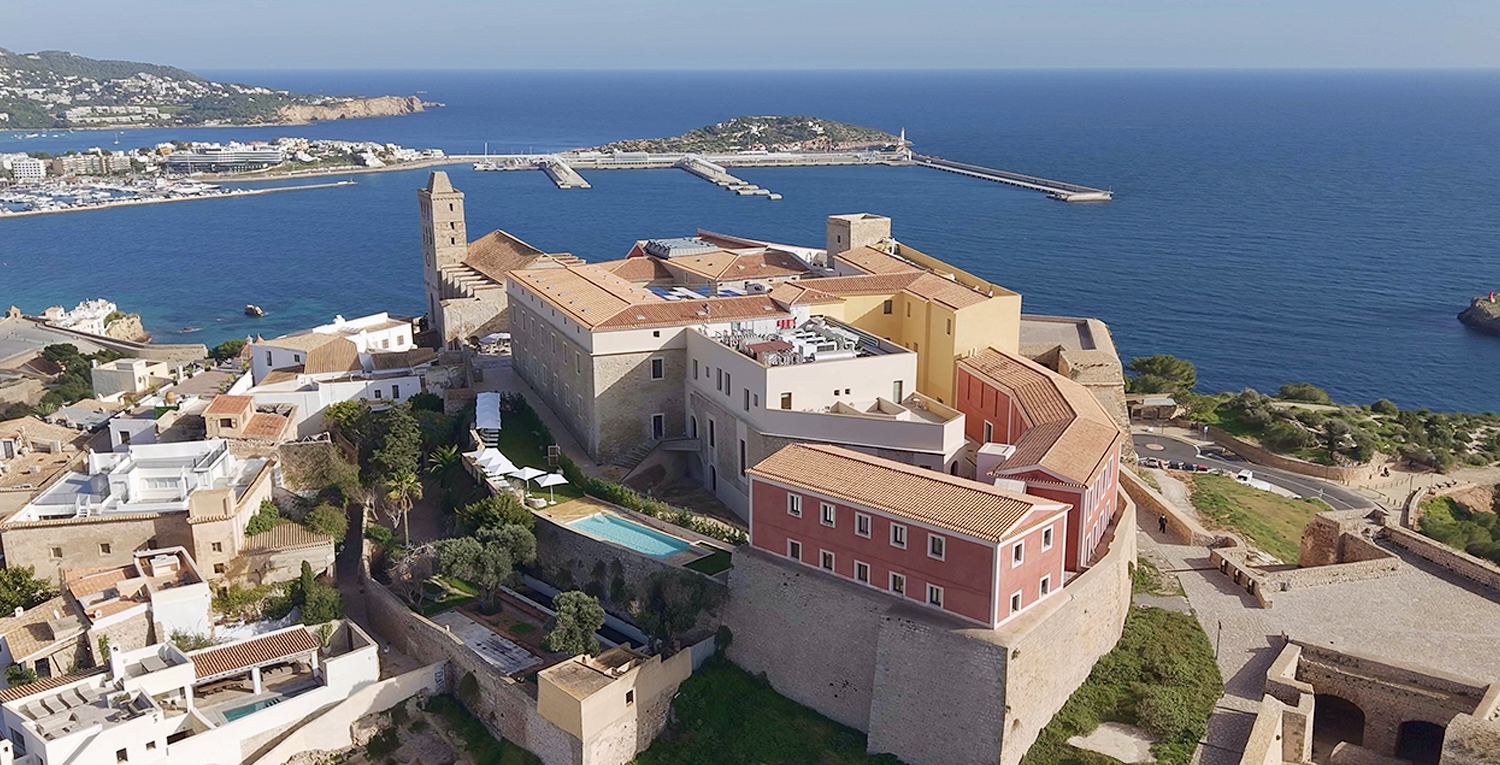
Break out the cava! Ibiza is about to have its very own fully functioning Parador – which if you didn’t know is a government owned hotel of historical and cultural value. Yes, after 17 years (basically 5 World Cups, a global recession, a pandemic, and enough municipal meetings to age several governments) the Parador de Ibiza is finally ready to open. Honestly, I’m just happy it’s here in my lifetime.

But I digress – it’s beautiful. It really is.

66 rooms of which 41 are for guests and the rest are for staff – thanks to the Ibiza housing crisis and which feels like the only sane way to solve the problem. There’s a wellness area, outdoor pool, terraces, solarium, and all the cultural trimmings you need to justify 17 years of work. They even built a courtyard with a canopy and a mini auditorium, presumably for events, presentations, and future complaints about pigeons (but I shall come to that later).

Most importantly it sits atop Ibiza’s iconic old town in the most photogenic pocket of D’alt Vila, next to the beautiful cathedral with sea views and just waiting for that thoughtful cultural Instagram pose.

At FITUR in Madrid this week, officials explained the delay of recovering Punic walls, Roman ruins, medieval arches, underground parking, and heritage restorations that made this a really complex project and all joking aside it probably was but it also feels like the construction version of ‘my dog ate my homework’ except the dog is UNESCO.

There’s also a “museumisation” phase (yes that really is a word) still underway (because why finish everything before opening?), but they promise it’ll be done by the end of the year. I believe them… kind of…in the same way you believe airlines when they say your delayed flight will depart ‘soon’.

In the most Ibiza twist imaginable, the Parador now needs a falconer to scare away pigeons. Yes, a literal falconer, as in trained birds of prey patrolling the bastions of D’alt Vila like it’s a medieval Netflix series. They’ll also be trapping invasive snakes and wild cats, because apparently nature didn’t get the memo that tourism is king of the island and just in case you were were wondering the salary for the falconer is €30,000 a year, because of course it is.

Wheels turn slowly in these parts and it’s been a long process (understatement of the year) but everybody’s proud and rightfully so. Ibiza’s Mayor, Rafa Triguero, called the opening a “historic milestone,” which it is – mostly because it survived 17 years of bureaucratic, logistical, and archaeological purgatory to exist at all.

Ibiza also finally joins the Paradores club, becoming number 99 in the national portfolio, the first in the Balearics and another big step towards ‘deseasonalisation’ (another long word) which has been the island’s version of ‘New Year’s resolutions’ for decades.

Am I excited? Yes. It’s gorgeous, cultural, heritage-rich, job-creating and genuinely good for the island. Am I annoyed? Hell yes because it’s been well over a decade of seeing that bloody great big crane which is thankfully no longer there.

But hey it’s here and it’s happening. Reservations start next week and guests arrive late February (hopefully). Better late than never, though if they decide to renovate anything else in D’alt Vila may I humbly suggest we start now for a 2043 grand opening.

INFO: www.paradores.es/en
Ibiza’s Big Challenges in 2026

The White Isle continues to outshine its rivals because it sells a feeling not just a destination. Freedom, intensity, beauty and belonging supported by smart branding, local entrepreneurs, natural assets and a high-value tourism economy makes Ibiza the envy of other destinations but there are issues that have been bubbling under for years and will become front and centre in 2026.

TOURISM MODEL
Let’s start with the dreaded ‘turismophobia’ which symbolises this issue in one over used, press friendly word.

For the record, TURISMOPHOBIA is the term used to describe hostility, resentment or opposition towards mass tourism especially when local residents feel that tourism is harming their quality of life.

Ibiza’s popularity surge has opened the floodgates for increased arrivals from non-traditional markets such as North America and this has put intense pressure on its environment, services and the general community.

Rightly or wrongly (depending on your viewpoint) Ibiza and its larger sister island Mallorca have become torch bearers for Mediterranean destinations struggling with pressure on resources and infrastructure during peak months.
Although it’s always been there, tourism saturation is perceived to be affecting quality of life for residents and in the wider sense Ibiza’s traditional identity.

Efforts to shift towards a more sustainable tourism model is causing tension between residents and visitors with local authorities introducing measures such as limits on cars, reduced tourist bed capacity and more regulated tourism planning but managing this transition remains a challenge.

HOUSING AND RENTAL CRISIS
Arguably still top of the list in 2026 is affordable housing which is becoming increasingly scarce. Many workers and professionals find rents exceed what they can afford (or earn) driving some into makeshift living conditions like vans or tents.

The shortage also makes it hard for the tourism industry to attract and retain staff during the season. This housing stand-off creates strong social tensions and threatens long-term community stability but the Balearic Government has promised to take action so 2026 should see moves to solve this issue. We are watching.

INFRASTRUCTURE ISSUES
Ibiza’s infrastructure continues to struggle with the demands of seasonal peaks. After Formentera introduced a scheme to limit vehicles arriving on ferries a similar scheme has been rolled out in Ibiza to ease road pressure but accountability is opaque. Waste processing systems are being modernised to handle tourist-related spikes but recycling is still a major issue.

After the floods of September and October 2025 which attracted worldwide headlines, major sewage overhauls are planned in 2026 to prevent flooding and improve water management. These projects reflect longstanding infrastructure struggles that need sustained investment and have been found wanting in 2025.

ENVIRONMENT
Ibiza’s natural environment is its biggest asset but is under constant stress from tourism and climate issues. Water scarcity and groundwater depletion are concerns during peak seasons while waste volumes far exceed typical levels especially during the summer months.

Recycling is evident but not as enforced as it should be and a delicate marine ecosystem face threats from pollution and unregulated anchoring by large boats in the summer months but after lots of negative press this is being monitored more closely by the authorities.

Efforts to protect these resources and advance eco-tourism are underway but the balance between short and long term goals is fragile.

ECONOMIC PRESSURES
Ibiza’s economy for decades has long depended on seasonal tourism particularly nightlife and the party culture but local politicians are trying to diversify, recognising that tastes are changing. Recent trends show a decline in certain types of high volume tourism due to stricter regulations and resident pushback such as San Antonio’s West End but now the town hall is offering incentives for businesses to change to a more family friendly model.

As seen at the big 3 European travel markets of London, Berlin and Madrid there’s a push to diversify toward wellness, culture, nature and year-round economic activity. This adjustment can create economic uncertainty for businesses reliant on the old model who refuse to change.

SEASONAL WORKFORCE AND SERVICES
The tourist season still dominates local employment and workforce shortages and housing issues will once again complicate staffing in 2026. Thanks to Brexit the historical young (and cheap) British labour market is no more with reliable staff always a challenge to find but minimum wage has finally been raised in 2025.

Public services such as transport, healthcare and waste collection are at breaking point during peak periods and long-term retention of workers is tied closely to resolving the housing crisis.

OVERVIEW
As Ibiza becomes even more popular, and with only a limited land surface to work with, if you scratch away at the surface, 2026 will see another challenging year to create the balanced utopia that we all crave.

You Reap What You Sow 

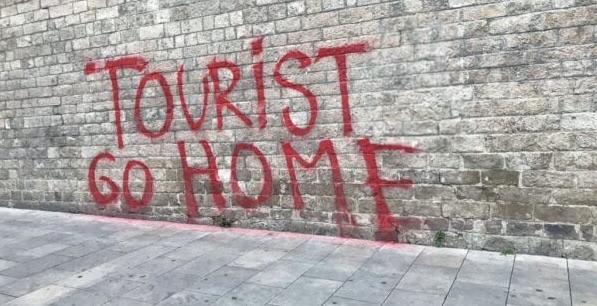
Graffiti in Barcelona

Has the penny dropped yet? Activists on Spanish streets shouting anti tourist slogans, graffiti on Barcelona walls saying ‘tourist go home’, keyboard warriors always willing to double down on why ‘tourism’ is such a dirty word. Idealist thinking at its most dangerous.

Empty streets, staff being laid off, restaurants 40% down in Mallorca, Balearic businesses closing. Can you join up the dots here? It’s August and tempers are starting to fray but the current situation has only shined a brighter light on Spain and Ibiza’s issues and many are seeking answers. The Ibiza business model that took 40 years to mould has taken 5 years to destroy.

Social media might tell you that all in the garden is rosy however as any serious user of ‘InstaSnapFace’ knows you should never let the facts get in the way of a good story, like influencers peddling their ‘perfect lives’ until you meet them only to realise they are neurotic basket cases using likes and views as their only currency. 

If I’m not making any sense then let me spell it out with a simple equation. Tourismophobia + high prices + poor service = trouble. 

But this is only half the story on the White Isle. 3 night weekend offenders who pre-book everything and only use the same 10 businesses (that all have a digital marketing army behind them), adult only signs, a small amount of families (who rarely leave their all inclusive hotel), an airport arrival lounge that doubles as a discotheque, fluid hotel pricing to eye watering levels and many other things are marginalising the middle market mass tourism that historically accounted for the majority of Ibiza’s income. 

The world is too small, there are too many other options to think you can pull the wool over the eyes of those valuable tourists. The re-emergence of Greece, the consistent quality of Turkey, the new markets opening up, forever tempting the tourist dollar. As any holiday company boss will tell you, it’s a cut throat business.

Ibiza has world class day and nightclubs, a rich culinary history that has now added top-end restaurants, a UNESCO world heritage site equivalent to any in the Mediterranean, natural beauty beyond compare. All the ingredients are there yet the final recipe is a bitter taste to many.

It’s a new order and many businesses are struggling under the pressure. The complementary offering can’t get a foothold anymore and whereas in previous years many could withstand the odd bad year, now it’s almost impossible.

The big businesses are becoming all powerful, there’s no room for others. The investment is so high that no stone is left unturned in the pursuit of success. Places that previously relied on historic goodwill have their wings clipped so are unable to function like before. Never has the phrase ‘the rich get richer and the poor get poorer’ been so apt. The Ibiza of 2025 is a relentless, ruthless place unforgiving for those who aren’t on the same page or lucky enough to be on the top table.

Ibiza is and always has been an incredible destination but the equilibrium is now so skewed that it’s creating social tension which has spilled over and blamed the one thing it can’t do without, the proverbial shooting yourself in the foot.

And guess what…. it looks like those pesky tourists who come over to Spain and the Balearics, and more specifically Ibiza and Mallorca, with pockets full of credit cards and have the audacity to enjoy themselves have started reading the headlines with placards and graffiti saying ‘tourist go home’. As the old saying goes, you reap what you sow.