
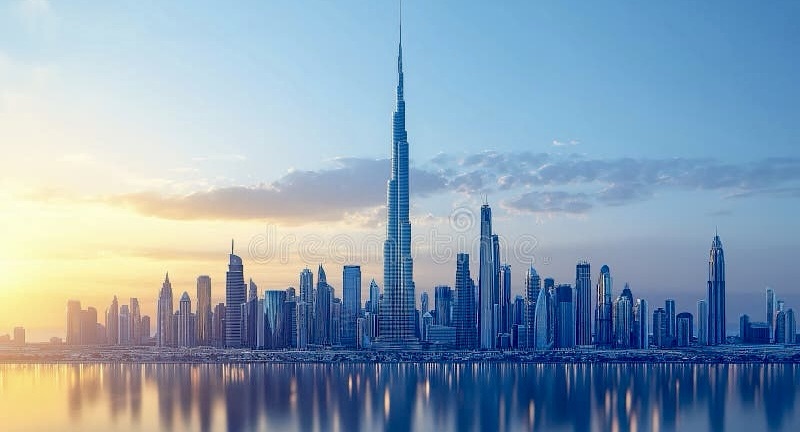
For more than two decades, Dubai has perfected the art of appearing immune to the chaos of the Middle East. While wars raged in Iraq, Syria, and Yemen, the emirate sold a different story to the world: stability, luxury, sunshine, and a skyline that seemed permanently pointed toward the future.
In many ways, Dubai has felt like the geopolitical equivalent of Ibiza in peak summer – a carefully curated bubble where the outside world’s problems seem to stop at the airport runway.
But the current regional conflict has delivered something Dubai has largely avoided since its rise in the early 2000s – direct pressure. And the response so far raises an uncomfortable question: is Dubai confronting reality, or trying to control the narrative so tightly that it risks appearing to ignore it?
The End of the “Untouchable Dubai” Myth
Dubai’s success has been built on perception as much as policy. For years it has marketed itself as the Middle East’s safe haven – a place where global capital, influencers, entrepreneurs and tourists could live largely insulated from the instability surrounding it.
Now, missiles and drones linked to the escalating regional conflict have shattered that illusion. Some attacks have even struck buildings and infrastructure in the UAE, while hundreds of projectiles have reportedly targeted the country since tensions escalated earlier this year.
For a city whose brand is built on safety and certainty, that is a serious reputational challenge.
And it’s one Dubai has limited experience handling.
Controlling the Narrative
The authorities’ immediate reaction has been familiar: control the flow of information.
Residents and visitors have been warned not to film or share images of missile strikes or their aftermath, with officials arguing that such posts could spread panic or misinformation.
In recent days, more than 20 people have reportedly been charged under the UAE’s cybercrime laws for sharing or reposting footage related to the attacks. A British tourist is among those facing prosecution, with potential penalties including prison, heavy fines and deportation.
Authorities say the crackdown is necessary to prevent rumours and protect public security, warning that spreading unverified information can lead to fines of up to 200,000 dirhams and possible jail time.
From a government perspective, the logic is clear: during a security crisis, information control reduces panic and prevents hostile actors from exploiting chaos.
But in the age of social media, such measures can also have the opposite effect – fuelling speculation that the authorities are more concerned with optics than transparency.
The Misinformation Problem
The information vacuum has already produced a wave of rumours.
Among the most widely circulated claims are stories suggesting the government is paying hotel bills for stranded residents or quietly evacuating large numbers of people. Many of these reports appear exaggerated or inaccurate, yet they continue to spread online.
The irony is obvious. When official communication is limited and independent reporting constrained, misinformation fills the gap.
Dubai’s traditional model – tight message control combined with aggressive public relations – worked well in a relatively calm region. In the fog of a real geopolitical crisis, it becomes much harder to sustain.
The Influencer Economy Meets Reality
Another layer of complexity is Dubai’s influencer culture.
The emirate spent years cultivating itself as the global capital of lifestyle influencers and digital entrepreneurs. Thousands of creators relocated there, attracted by low taxes, luxury living and a welcoming regulatory environment.
But the same ecosystem now presents a problem. When conflict reaches a city filled with people who make their living documenting daily life online, controlling the narrative becomes far more difficult.
Warnings have already been issued to influencers that posts deemed harmful to national unity or the country’s reputation could lead to significant penalties.
For a city that built its brand on social media visibility, that creates a strange contradiction: the very platforms that helped sell Dubai to the world are now tightly restricted.
Dubai’s First Real Stress Test
Dubai has faced crises before – the 2008 financial crash, the pandemic, and periodic regional tensions. But in each case the city benefited from either distance from the problem or the ability to control the narrative.
This time feels different.
Missiles landing nearby, expats reconsidering their future in the region, and the global media scrutinising the situation in real time represent a fundamentally new challenge.
The emirate is no longer just a spectator to Middle Eastern geopolitics. It is now part of the story.
Between Stability and Transparency
Dubai’s leadership has always prioritised stability above all else. In many ways, that strategy has been the foundation of the city’s success.
But stability in a crisis requires trust. And trust is built not only through control, but through credibility.
If Dubai’s response to the war is seen primarily as an attempt to suppress uncomfortable images and silence discussion, it risks undermining the very confidence it is trying to protect.
The coming months will reveal whether the emirate can adapt to a new reality – one where maintaining its carefully constructed image may require a little more openness, and a little less control.
For a city that has spent twenty years shaping the narrative, that might be its toughest challenge yet.

 MAN IN SAN AN by Martin Makepeace