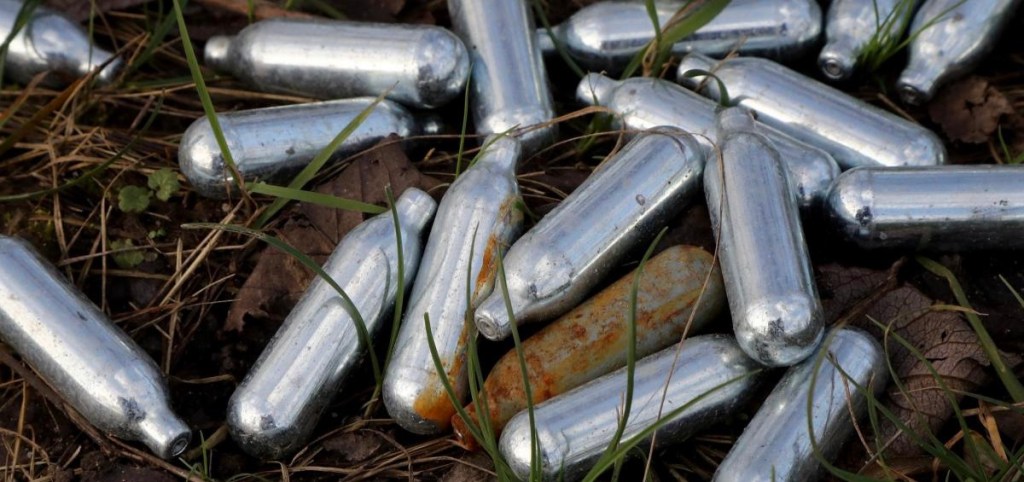
If you’ve spent any time around San Antonio in recent summers, you’ve seen the silver canisters or stepped over them the next morning. Laughing gas aka nitrous oxide isn’t just a nuisance anymore it’s become one of the town’s most stubborn public-order headaches and according to Mayor Marcos Serra, the real problem isn’t policing, it’s the law.
Serra paints a bleak picture: if Spanish legislation doesn’t change, stopping the sale is impossible. Local police have made around 100 arrests in the last three years tied to distribution, yet sellers often return to the streets within 24-48 hours. The issue isn’t effort, the municipality says it’s already throwing everything it can at the problem, it’s the legal situation. Without the substance classified as a narcotic nationally, enforcement hits a wall.
Security councillor Neus Mateu says San Antonio has become something of a case study. Other mainland municipalities reportedly call to ask how San An handles the situation, from inspections to street surveillance because few places have tried as many tactics. Municipal ordinances allow fines for consumption but that’s about it. Recovering those fines from foreign visitors is nigh on impossible.
So the Town Hall keeps pushing year after year, asking Madrid to tighten the legal framework, pointing to the UK where stricter penalties (including prison sentences) have now been introduced. For now, however, Serra suggests San Antonio is largely fighting alone.
Meanwhile, enforcement continues on the ground. Agents patrol nightlife areas, issue sanctions and even deploy “coexistence agents” tasked with educating tourists about local rules from basic dress codes to bans on public use of nitrous oxide. They’re backed by National Police and can initiate complaints that feed into enforcement action.
But the problem isn’t only legal or behavioural, it’s physical. The waste footprint is massive. The council collects kilos and kilos of discarded canisters and recycling them reportedly costs more than the containers themselves. That expense lands squarely on local authorities with little support from higher levels of government.
Beyond image and cost, officials point to safety concerns. Health risks are widely cited, and last September’s fatal incident involving tourists, linked to a driver allegedly under the influence, sharpened the urgency of the debate around regulation.
The takeaway? San Antonio isn’t ignoring the issue, it’s confronting the limits of local power. Enforcement can disrupt, fine, and educate but without legislative change, authorities argue the cycle will keep repeating: confiscate today, clean up tomorrow and see the same trade back on the promenade the next night.
Whether tougher national laws arrive or not, one thing is clear – the fight over nitrous oxide isn’t just about nightlife optics. It’s about public safety, municipal budgets and the reality of governing a global party destination that sits at the intersection of tourism, law, and responsibility.

 MAN IN SAN AN by Martin Makepeace